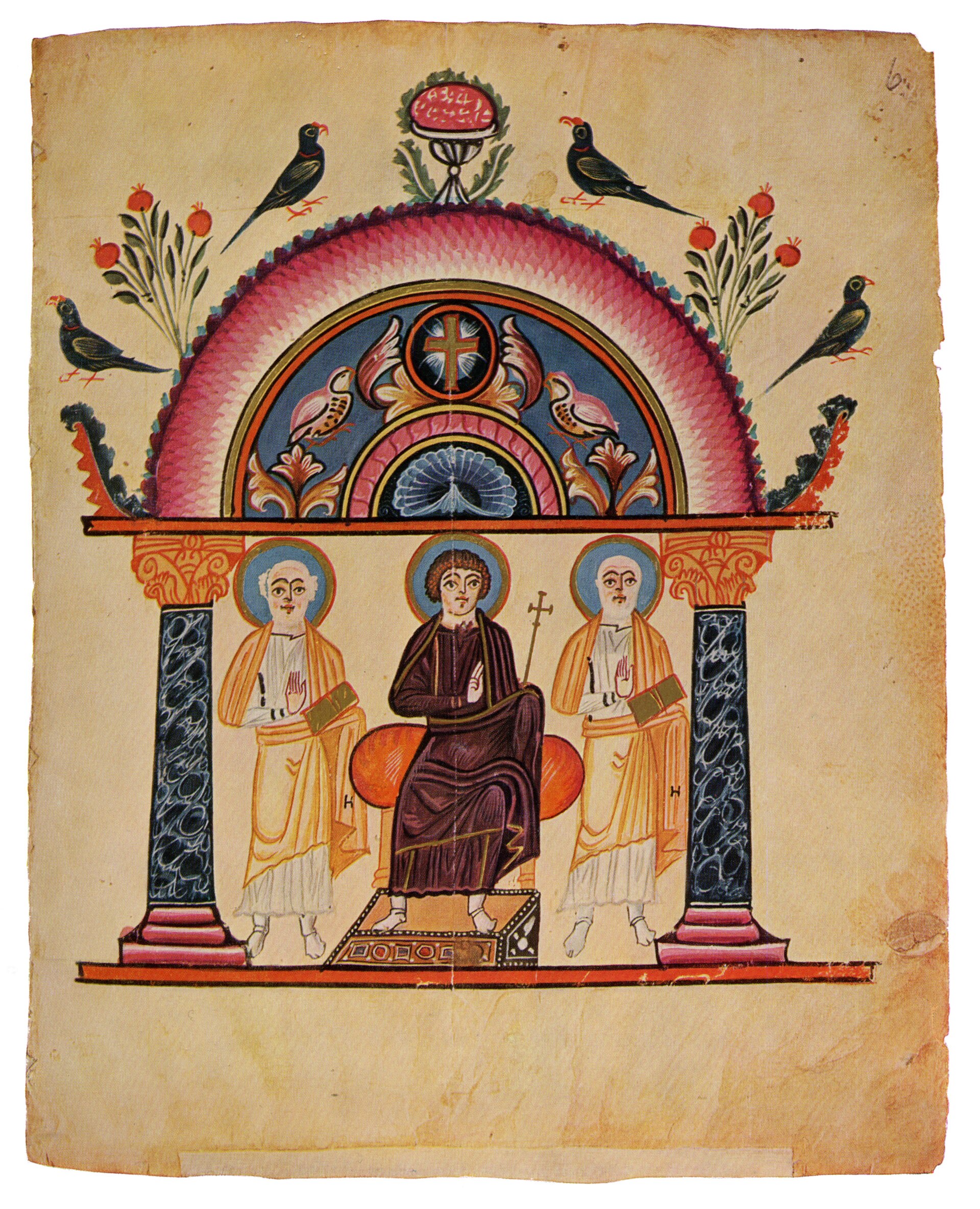
Etchmiadzin Gospels
Doctrinal reflection
The Etchmiadzin Gospels (Matenadaran MS 2374) represent one of the most significant surviving Armenian illuminated manuscripts, dated by colophon to AD 989 and produced at the scriptorium of Noravank or a closely associated center. The codex is celebrated not only for its tenth-century Armenian miniatures but also for its reused late antique ivory plaques affixed to the binding covers, generally assigned to the sixth century AD on stylistic and iconographic grounds. These ivories—depicting the Virgin Theotokos enthroned, the Nativity, and the Adoration of the Magi—reflect Justinianic-era Byzantine carving conventions and constitute rare surviving examples of early Byzantine ivories in continuous liturgical use. The tenth-century illuminations include canon tables framed by elaborately interlaced architectural arcades, four Evangelist portraits, and prefatory miniatures illustrating the Annunciation and the Adoration, all executed in a style that synthesizes Byzantine figural conventions with distinctly Armenian chromatic and decorative sensibilities. The theological program foregrounds Incarnational theology consistent with Armenian Apostolic Christological tradition, with the Theotokos imagery carrying particular doctrinal weight given Armenian reception of Ephesus (AD 431). Iconographically, the canon tables demonstrate dependence on Eusebian models mediated through Byzantine and Syriac transmission channels, while the Evangelist portraits show affinities with the Rabbula Gospels tradition. The manuscript's scholarly significance lies in its capacity to document Armenian-Byzantine artistic exchange, the longevity of late antique ivory programs, and the persistence of Early Christian iconographic schemas into the middle Byzantine period. Sources: Revue des études arméniennes; Dumbarton Oaks Papers; Journal of the Walters Art Museum.