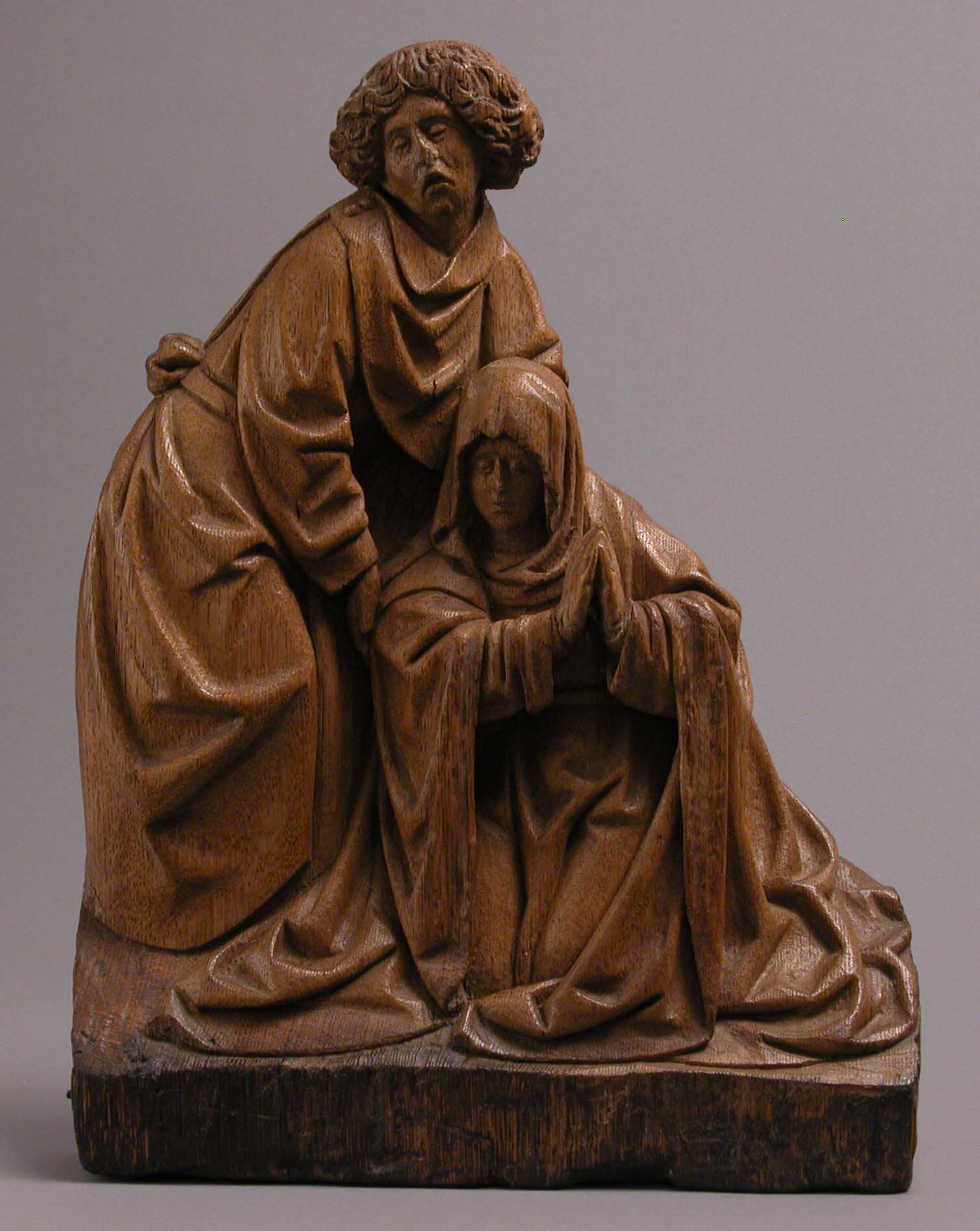
Virgin Supported by Saint John
Doctrinal reflection
The entry describes a South Netherlandish oak statuette of the Virgin Supported by Saint John, dating to the early sixteenth century and held in the Medieval Art collection of the Metropolitan Museum of Art, gifted by J. Pierpont Morgan in 1916. This object falls outside the strict parameters of Byzantine visual culture and presents a methodological difficulty for Scriptorium classification: it is a Western Gothic/late medieval devotional sculpture produced in the Low Countries, engaging Northern European workshop traditions rather than Byzantine iconographic programs. The iconographic type—the swooning or supported Virgin at the Crucifixion or Deposition—derives from the Compassio Mariae devotional tradition prominent in late medieval Western piety, expressed through figures such as the Vesperbild and Pietà. Saint John the Evangelist steadying the grief-stricken Virgin reflects narrative episodes from the Passion sequence, drawing on John 19:26-27. In Byzantine tradition, a formally analogous arrangement appears in Crucifixion compositions as the Theotokos lamenting at the Cross, but the sculptural medium, stylistic idiom, and devotional function here are unambiguously Flemish-Brabantine. The object's theological program emphasizes affective co-suffering (compassio) rather than the more restrained Byzantine apophatic grief register. For Scriptorium purposes, assignment to Byzantine schema categories is approximate and forced; the entry is flagged as a Western medieval artifact misrouted into this archive. Scholarly evaluation would situate it within Gothic sculpture studies rather than Byzantine art history. Sources: Metropolitan Museum of Art Bulletin; Forsyth, 'The Throne of Wisdom: Wood Sculptures of the Madonna in Romanesque France'; Williamson, 'Gothic Sculpture 1140–1300.'