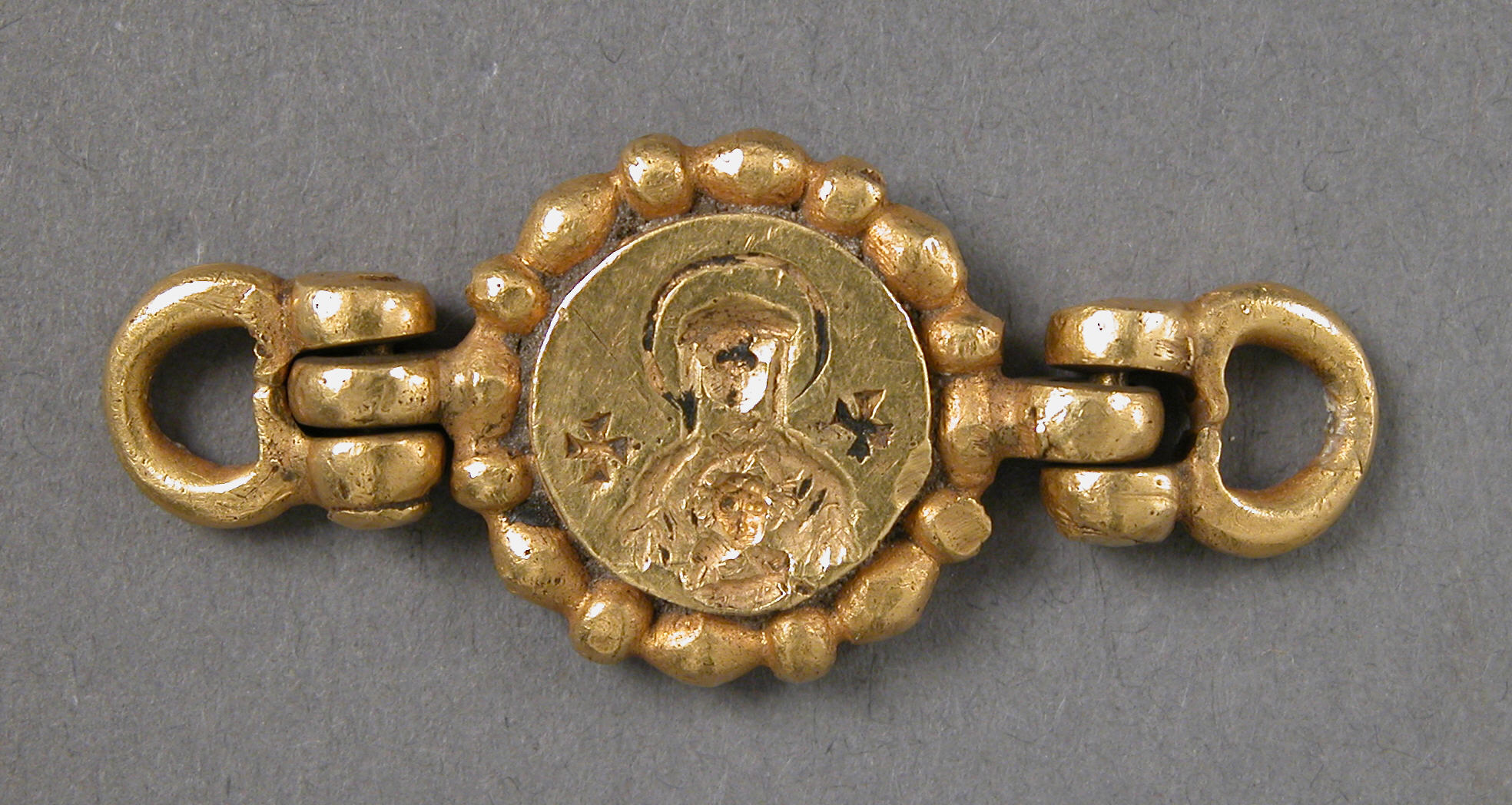
Clasp with Intaglio Medallion of the Virgin and Child
Doctrinal reflection
This sixth-century Byzantine gold clasp incorporating an intaglio medallion of the Virgin and Child represents an important intersection of late antique glyptic tradition and emerging Christian devotional imagery. Housed in the Medieval Art collection of the Metropolitan Museum of Art (Gift of Helen Miller Gould, 1910), the object dates to the Justinianic or immediately post-Justinianic period, a formative era for Marian iconography following the Council of Ephesus (AD 431), which formally established the Theotokos epithet and precipitated an explosion of Virgin-and-Child imagery across media. The intaglio technique—carving into the gemstone or glass paste surface rather than working in relief—reflects continuity with Roman gem-cutting traditions repurposed for Christian subjects. Set within a gold clasp, the medallion functioned simultaneously as a personal adornment, an apotropaic device, and a portable devotional object, categories that were not sharply distinguished in Byzantine material culture. The Hodegetria-adjacent composition, depicting Mary presenting the Christ Child frontally, encodes the theological duality of the Incarnation: the Virgin as intercessor and guarantor of Christ's humanity, the Child as the enthroned Logos. The gold setting amplifies the hierarchical and sacred status of the imagery, gold being the conventional Byzantine signifier of divine light and imperial dignity. Such portable objects are significant for tracing the dissemination of Marian iconographic types prior to the Iconoclast controversy and for understanding how elite patronage shaped devotional practice at the personal scale. Sources: Weitzmann, K., ed., Age of Spirituality (Metropolitan Museum of Art, 1979); Cutler, A., 'The Making of the Justinianic Past,' Dumbarton Oaks Papers; Byzantine and Early Medieval Antiquities, Dumbarton Oaks Research Library.