Sinope Gospels
Doctrinal reflection
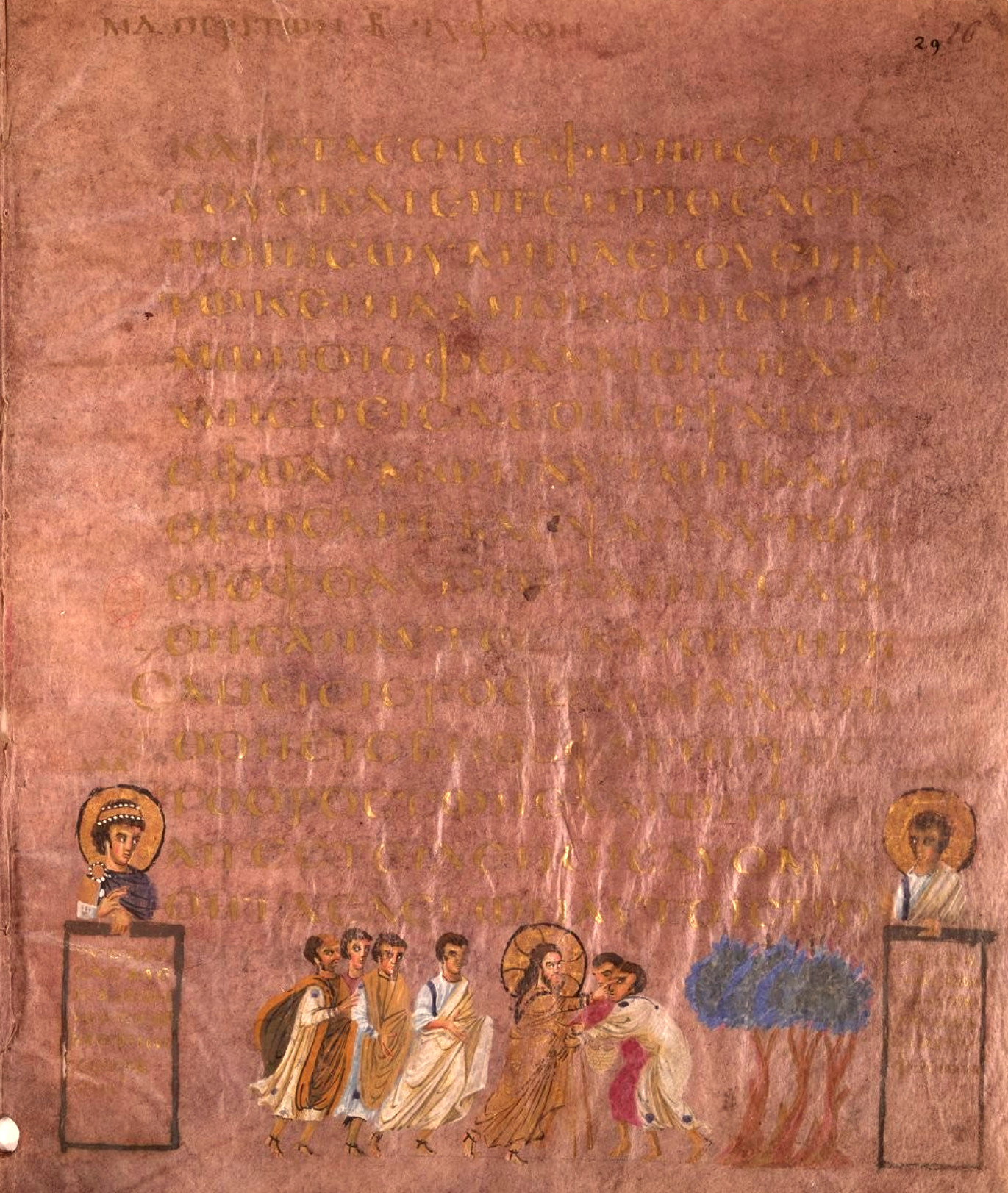
The Sinope Gospels (Paris, Bibliothèque nationale de France, Suppl. gr. 1286) constitute one of the most significant surviving examples of the luxury purple-parchment codex tradition of the sixth century AD. Likely produced in Constantinople or a major eastern scriptorium during the Justinianic period, the manuscript preserves five full-page miniatures executed in gold and silver ink on imperial purple-dyed vellum, a format reserving the codex emphatically for court or high ecclesiastical patronage. The surviving fragment contains portions of the Gospel of Matthew, situating the manuscript within a broader tradition of deluxe Gospel books including the Vienna Genesis and Rossano Gospels. Iconographically, the miniatures depict scenes from the Matthean narrative—most notably the Feeding of the Five Thousand, the Healing of the Blind, and the Healing of the Two Blind Men—each accompanied by unusual marginal roundels featuring Old Testament prophets holding scrolls prophetically anticipating the New Testament event above. This typological schema, pairing fulfillment scenes with prophetic anticipation in the margins, reflects a sophisticated theological program linking economy and prophecy that is largely unparalleled in contemporary manuscript illumination. The gold pigment employed throughout situates Christ and the sacred narrative within a hierarchical visual economy consistent with imperial theology of the Justinianic court. The manuscript takes its name from its reported provenance at Sinope on the Black Sea, though this origin has not been definitively established by modern scholarship. Conservation analysis has confirmed the authenticity of the purple dye as genuine Tyrian or related murex-derived coloring. Sources: Kurt Weitzmann, Late Antique and Early Christian Book Illumination (1977); Kathleen Corrigan, Visual Polemics in the Ninth-Century Byzantine Psalters (1992, contextual); Byzantinische Zeitschrift.