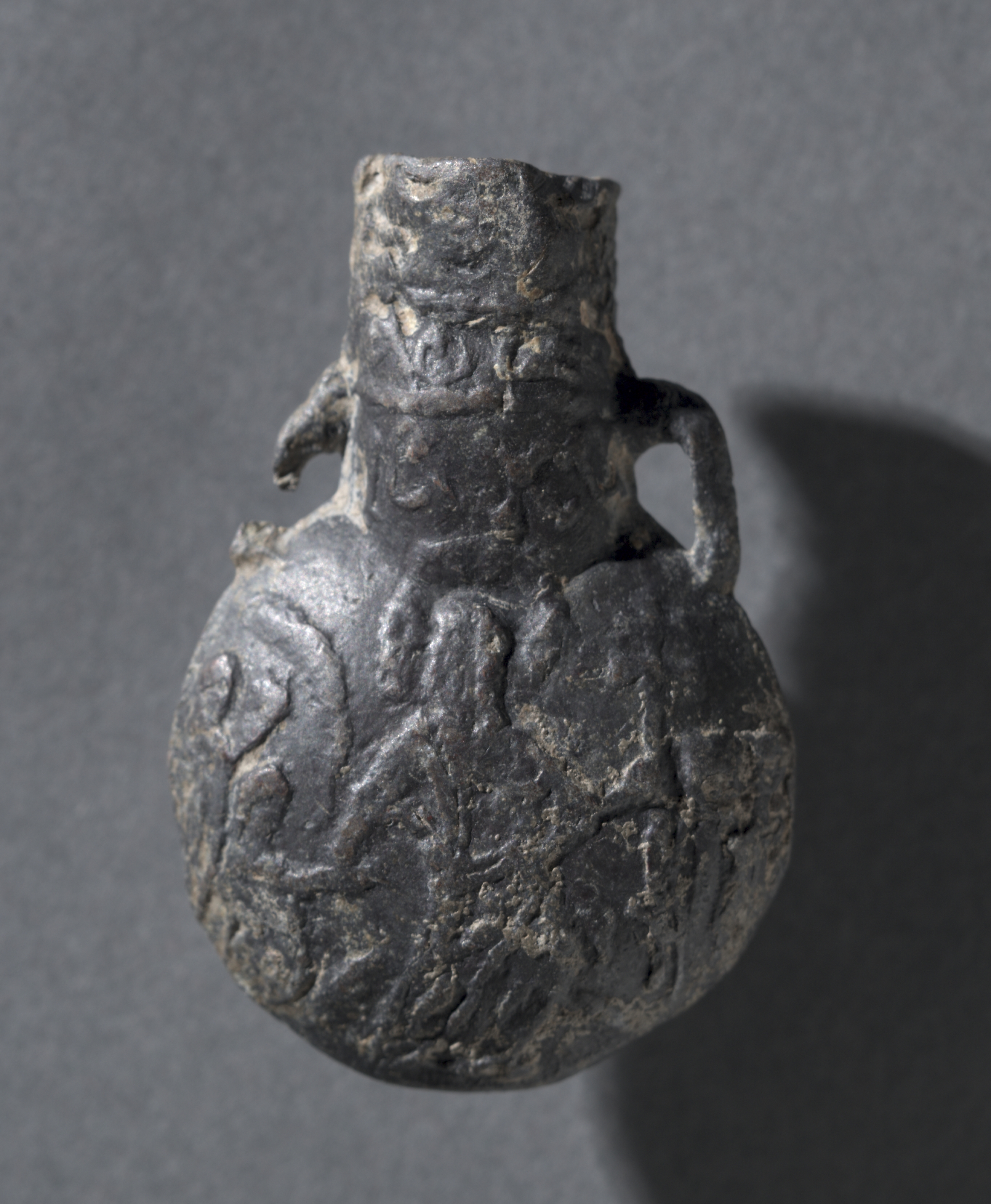
Pilgrim’s Flask
Doctrinal reflection
This lead pilgrim's flask (ampulla), dated c. 1099–1200 AD and held at the Cleveland Museum of Art, represents a rare category of devotional metalwork produced during the Crusader occupation of Jerusalem following the conquest of 1099. The object belongs to a tradition of eulogia—blessed contact relics distributed to pilgrims at holy sites—with antecedents in the Late Antique ampullae of the sixth and seventh centuries AD associated with Monza and Bobbio. The Crusader-period revival of such flasks coincided with the extensive rebuilding and reconsecration of the Church of the Holy Sepulcher, completed in the mid-twelfth century. Cast in lead, a material cheaper and more expedient than silver or tin-alloy, this ampulla bears two distinct iconographic registers: a schematic representation of the Church of the Holy Sepulcher's rotunda and facade, functioning as a topographical emblem certifying the pilgrim's presence at the site, and a scene of the Anastasis (Descent into Limbo), in which Christ harrowing Hell liberates the righteous ancestors. The Anastasis image links the physical locus of Christ's burial directly to the theological doctrine of redemption and resurrection, situating the flask within a coherent soteriological program. The conjunction of architectural portrait and Anastasis is theologically deliberate: entombment and resurrection are rendered simultaneously legible on a single portable object. The item's rarity signals the brevity of the Crusader ampulla tradition before Saladin's reconquest of Jerusalem in 1187 AD disrupted pilgrimage infrastructure. Scholarly significance lies in its documentation of cultural and devotional hybridity between Byzantine and Latin Christian practice in the Holy Land. Sources: Gesta, Dumbarton Oaks Papers, Journal of the Walters Art Museum.