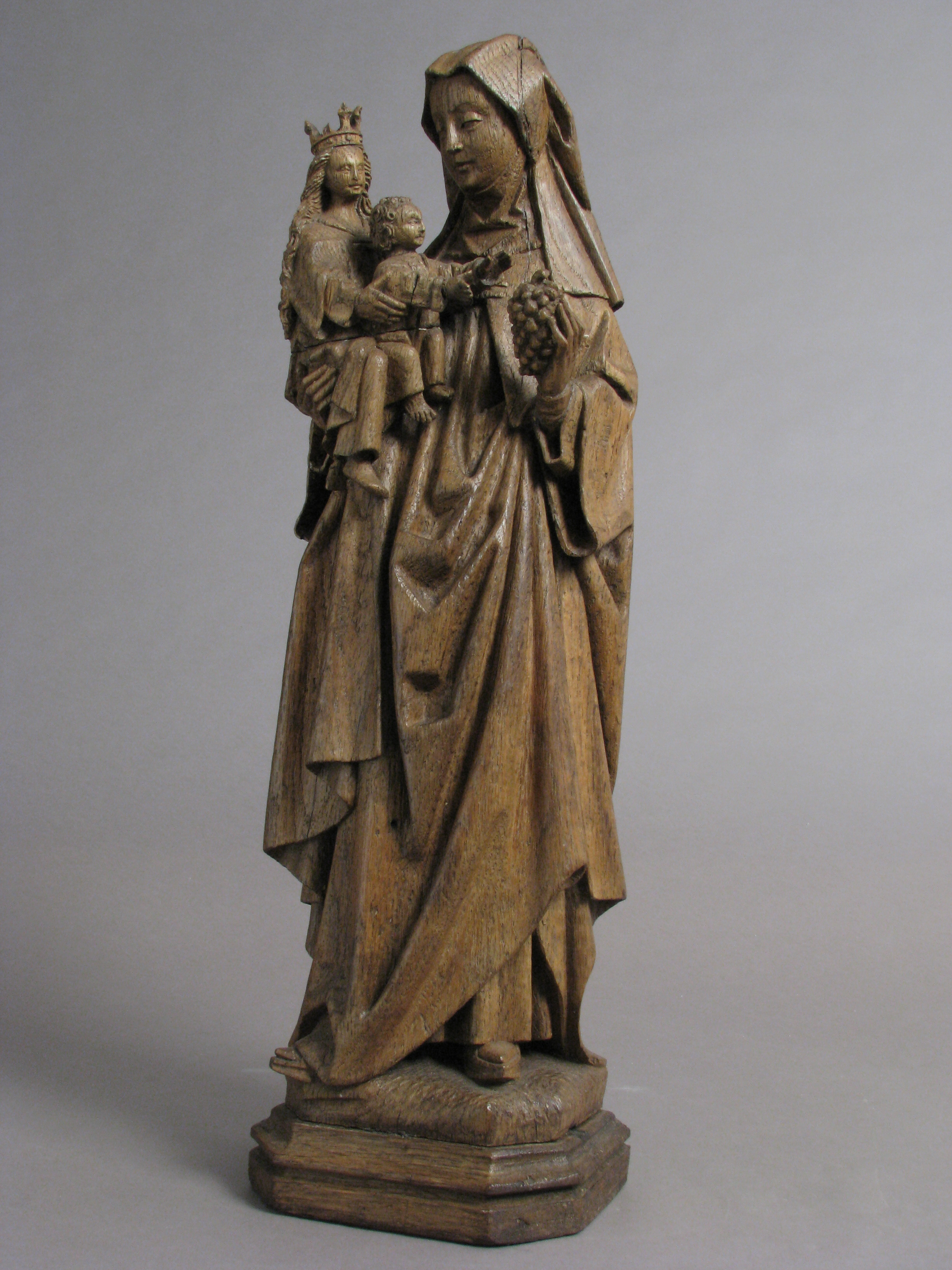
Saint Anne with Virgin and Child
Doctrinal reflection
This South Netherlandish oak statuette of Saint Anne with the Virgin and Child, dated AD 1500–1510, is held in the Medieval Art collection of the Metropolitan Museum of Art (Gift of J. Pierpont Morgan, 1916). The composition — Anne supporting both her daughter Mary and the Christ Child in a three-generational grouping — is the type Western art history calls the Anna Selbdritt and Italian usage the Anna Metterza. Everything known of Anne comes from tradition, not text: Scripture never names Mary's mother. The figure derives from the Protoevangelium of James, a second-century apocryphal text that Byzantine iconographers engaged extensively — the Chora Church mosaics in Constantinople (c. AD 1316–1321) give the Annunciation to Anne and Mary's infancy full programmatic treatment — and that the medieval West inherited and amplified into a flourishing cult of Saint Anne. Late medieval devotion read groupings like this one as celebrating a 'holy kinship,' a sanctified maternal line preparing Mary as a fit vessel for the Incarnation — a reading that fed the developing doctrine of her immaculate conception, defined by Rome centuries later in 1854. Scripture runs along a different line: the genealogies trace Jesus' legal and human descent to establish the covenant promises to Abraham and David (Matthew 1; Luke 3), and the Incarnation rests not on any prepared human pedigree but on the direct act of God — 'the Holy Ghost shall come upon thee' (Luke 1:35). As carving, the statuette aligns with Northern European devotional sculpture for household and parish use, its oak medium and workshop finish typical of Netherlandish production. Sources: Gesta (International Center of Medieval Art); Dumbarton Oaks Papers; Burlington Magazine.