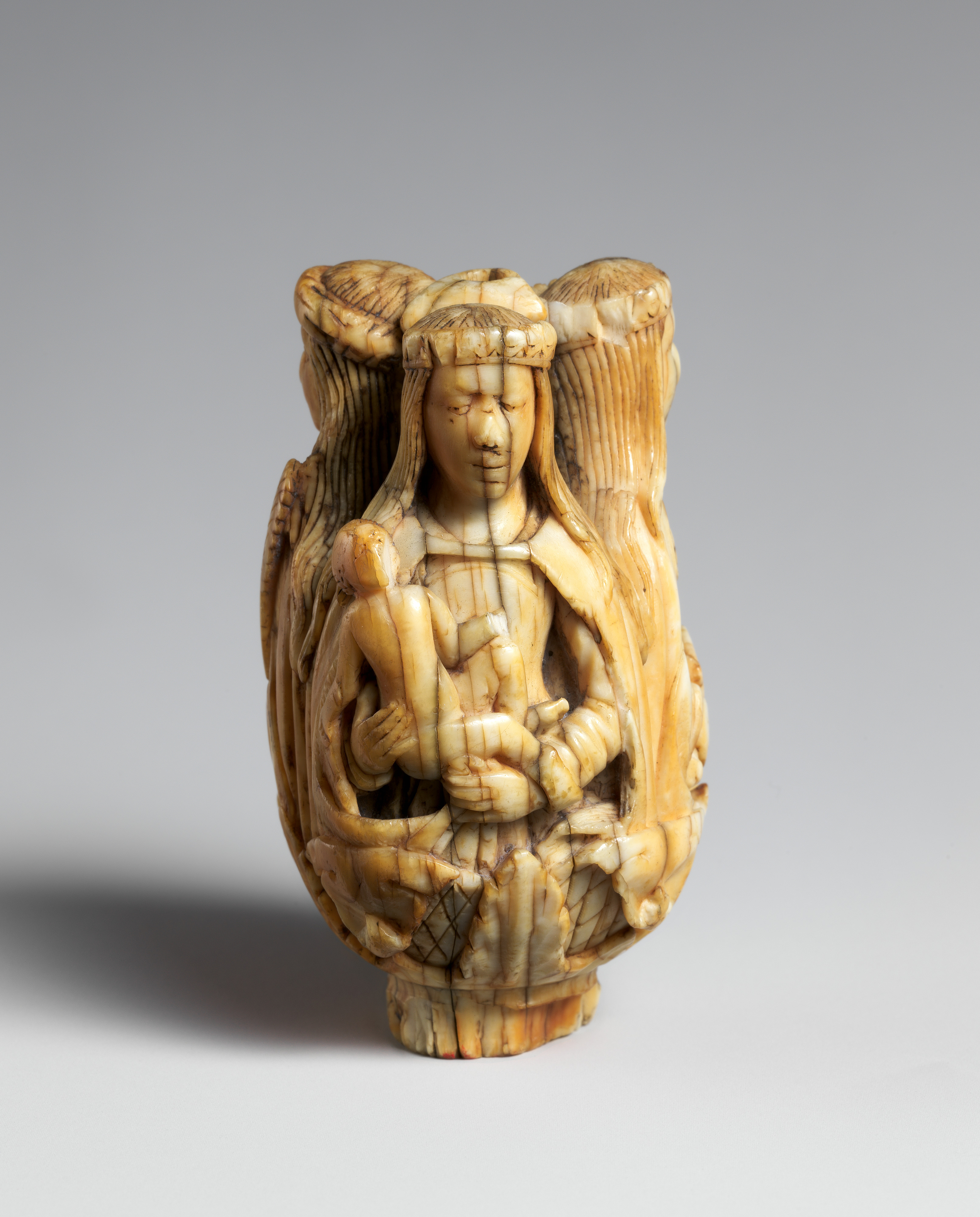
Rosary Terminal Bead with the Virgin and Child, Saint Barbara, and Saint Catherine
Doctrinal reflection
This rosary terminal bead, dated to the fifteenth century AD and attributed tentatively to a French workshop, is carved from elephant ivory and presents a tripartite devotional program across its diminutive spherical or ovoid surface. The object belongs to the category of personal piety instruments that proliferated in late medieval Western Europe, though its entry into a Byzantine Scriptorium archive invites comparative analysis with contemporaneous Eastern Orthodox prayer-bead traditions and portable devotional objects. The primary face presents the Virgin and Child (Theotokos and Christos) in a compositional arrangement consistent with Western Gothic Marian conventions, wherein the Virgin is depicted with the Christ child in a tender, often contrapposto embrace—a typology indebted to, yet diverging from, Byzantine Eleousa models. The secondary registers introduce Saint Barbara, identifiable by her tower attribute referencing her legendary imprisonment, and Saint Catherine of Alexandria, typically shown with a wheel or palm of martyrdom, both widely venerated intercessors in late medieval devotional culture. The ivory medium reflects the luxury craft production centered in Paris and the Low Countries during this period, workshops that supplied aristocratic and ecclesiastical patrons alike. Iconographically, the juxtaposition of Theotokos with two virgin martyrs evokes litanic invocation, paralleling the theological structure of Marian intercessory prayer formalized in the Rosary devotion spreading across Western Christendom following Dominican promotion in the thirteenth through fifteenth centuries AD. The object now resides in the Metropolitan Museum of Art's Medieval Art collection, donated by William H. Riggs in 1913. Sources: Koechlin, Raymond, Les Ivoires Gothiques Français; Randall, Richard H., Masterpieces of Ivory from the Walters Art Gallery; Gaborit-Chopin, Danielle, Ivoires médiévaux.