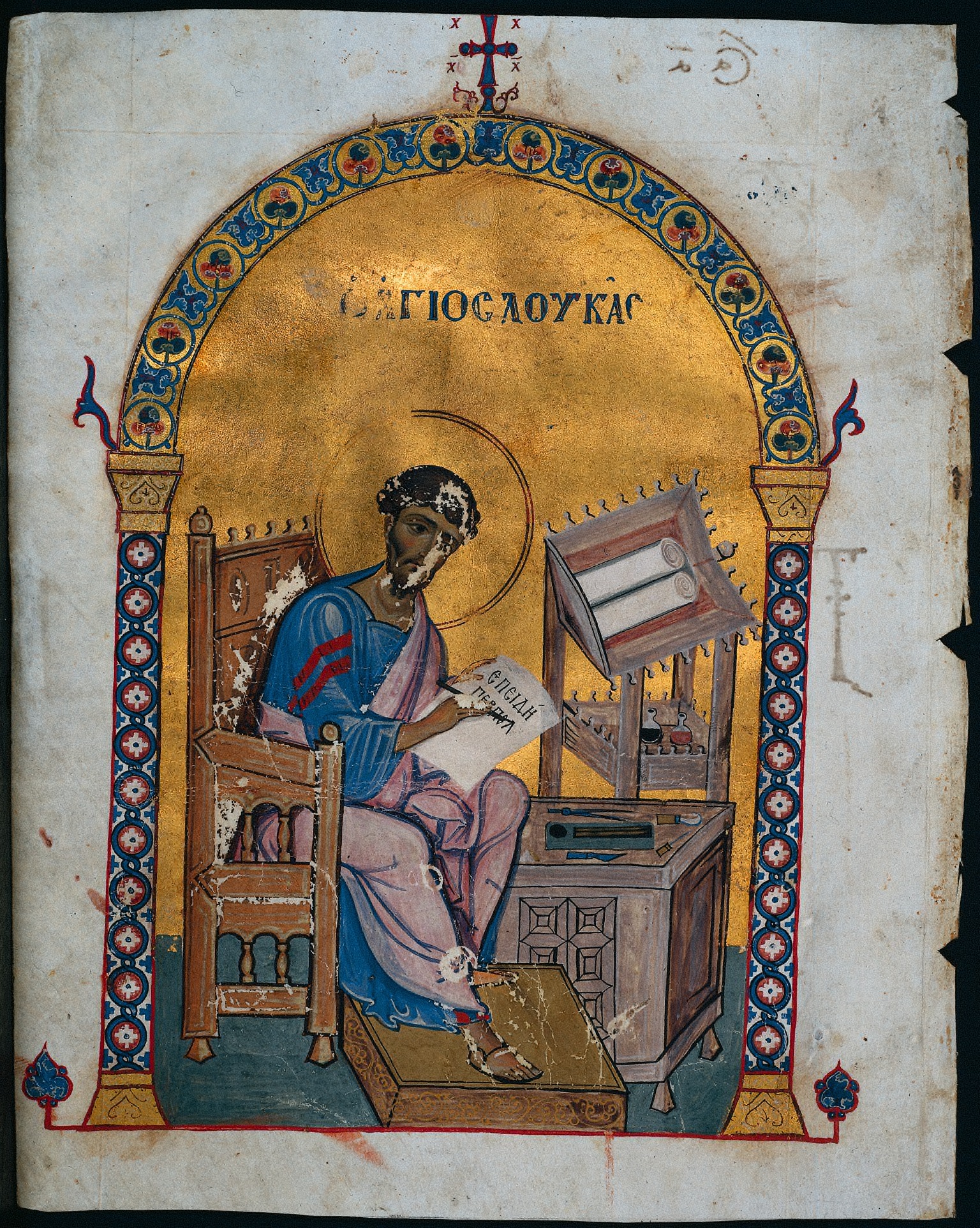
Leaf from a Lectionary with St. Luke
Doctrinal reflection
This manuscript leaf depicting St. Luke derives from a Byzantine lectionary produced in Constantinople between 1057 and 1063 AD, presented to the Holy Trinity Monastery at Chalke by Empress Katherine Komnene in 1063 AD. The work exemplifies the high Macedonian-to-Komnenian transitional style of Constantinopolitan court manuscript production, executed in ink, tempera, and gold on vellum. The evangelist portrait follows the well-established Byzantine iconographic type of the author-portrait, in which Luke is shown in the act of writing or in preparation for writing, surrounded by the implements of scribal craft: stylus, dividers, pens, knife, burnisher, and inkpots. This deliberate enumeration of tools serves a theological as well as mimetic function, grounding the evangelist's divine authorship in the material reality of textual production and thereby asserting the authenticity and authority of the scriptural text. The evangelist portrait tradition in Byzantine manuscripts draws on late antique author-portrait conventions while investing them with theological weight: the evangelists function as authenticated witnesses, their physical presence in the codex underwriting the reliability of the sacred text. The gold ground situates the figure outside historical time, within the celestial register. The lectionary format—organizing gospel pericopes for liturgical use—means this image was encountered within a context of ritual reading, amplifying the intercessory and authoritative role of the depicted evangelist. The manuscript's imperial patronage and monastic destination at Chalke underscore the devotional and political dimensions of high-quality Komnenian book production. Now held at the Cleveland Museum of Art, this leaf is a significant witness to mid-eleventh-century Constantinopolitan manuscript workshops. Sources: Dumbarton Oaks Papers; Byzantine and Modern Greek Studies; Cahiers archéologiques.