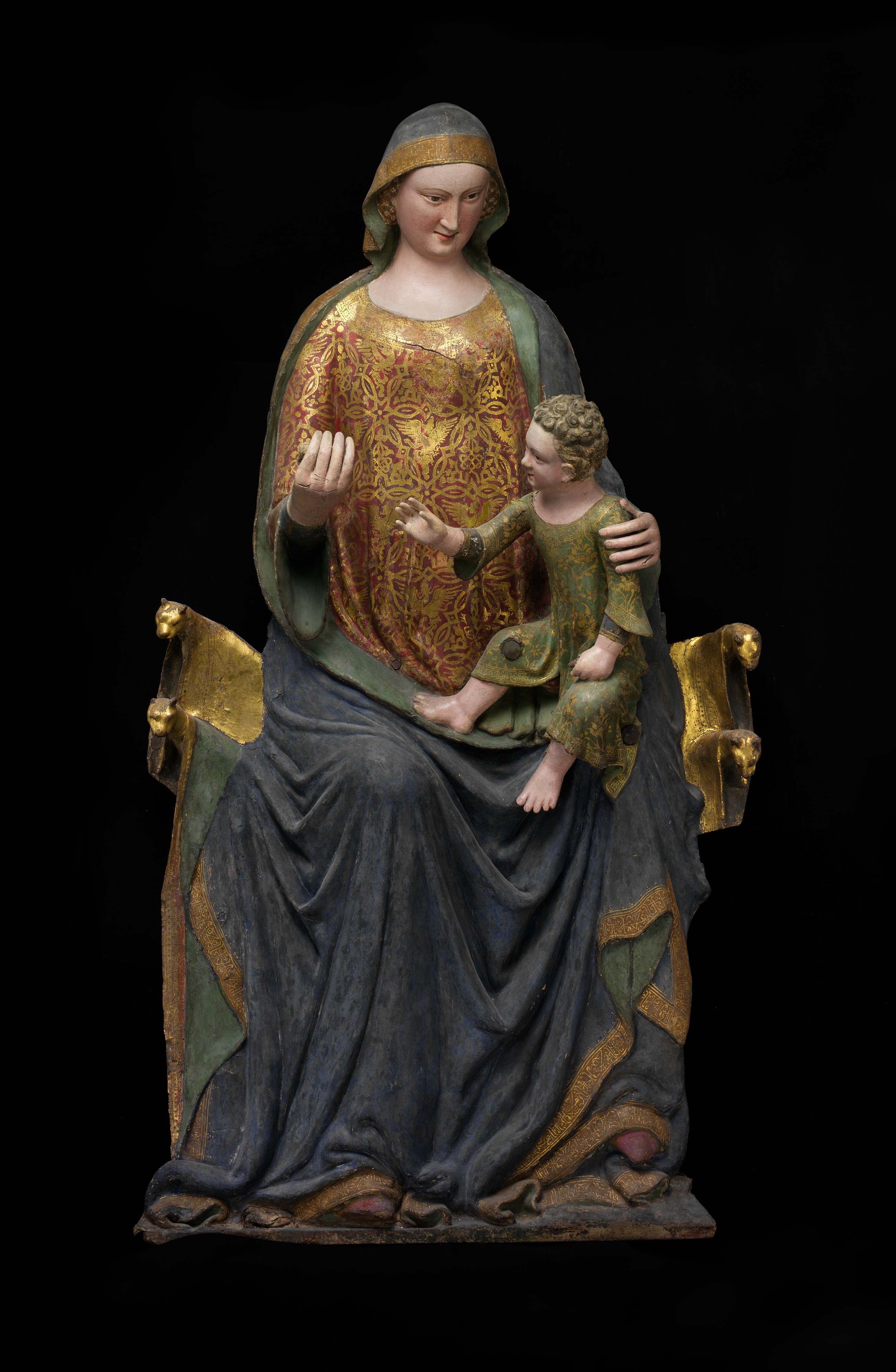
Enthroned Virgin and Child
Doctrinal reflection
This enthroned Virgin and Child, housed in the Medieval Art galleries of the Metropolitan Museum of Art (Rogers Fund, 1916), is a Central Italian devotional sculpture dating to the mid-fourteenth century AD. The work is constructed from a wooden core overlaid with painted canvas and gesso, a technique characteristic of Central Italian workshops of the Trecento that allowed for refined polychrome surface treatment while reducing material weight. The sculptural type belongs to the well-established Sedes Sapientiae (Throne of Wisdom) tradition, in which the Virgin functions as a formal throne upon which the Christ Child is enthroned as divine Logos, a theological program traceable to Ottonian and Romanesque precedents but here inflected by the more naturalistic tendencies emerging in the aftermath of Cimabue and the broader Italo-Byzantine current. The Christ Child is typically rendered frontally in hieratic posture, raising the right hand in blessing while the left holds a codex or scroll, signaling his identity as the Word made flesh. The Virgin, crowned or veiled, presents the Child to the viewer, enacting the intercessory role codified in Byzantine Hodegetria and Kykkotissa iconographic lineages. The gesso and painted canvas surface would have permitted detailed gilding and tempera-like pigment application, situating the object at the intersection of sculptural and panel-painting practices. Scholarly interest centers on questions of workshop attribution within the Central Italian milieu—Umbrian, Sienese, and Abruzzese centers have all been proposed—and the object's role in private or communal devotional contexts during the post-plague Trecento. Sources: Arte Medievale (journal); Gesta (International Center of Medieval Art); Studies in the History of Art (National Gallery of Art).