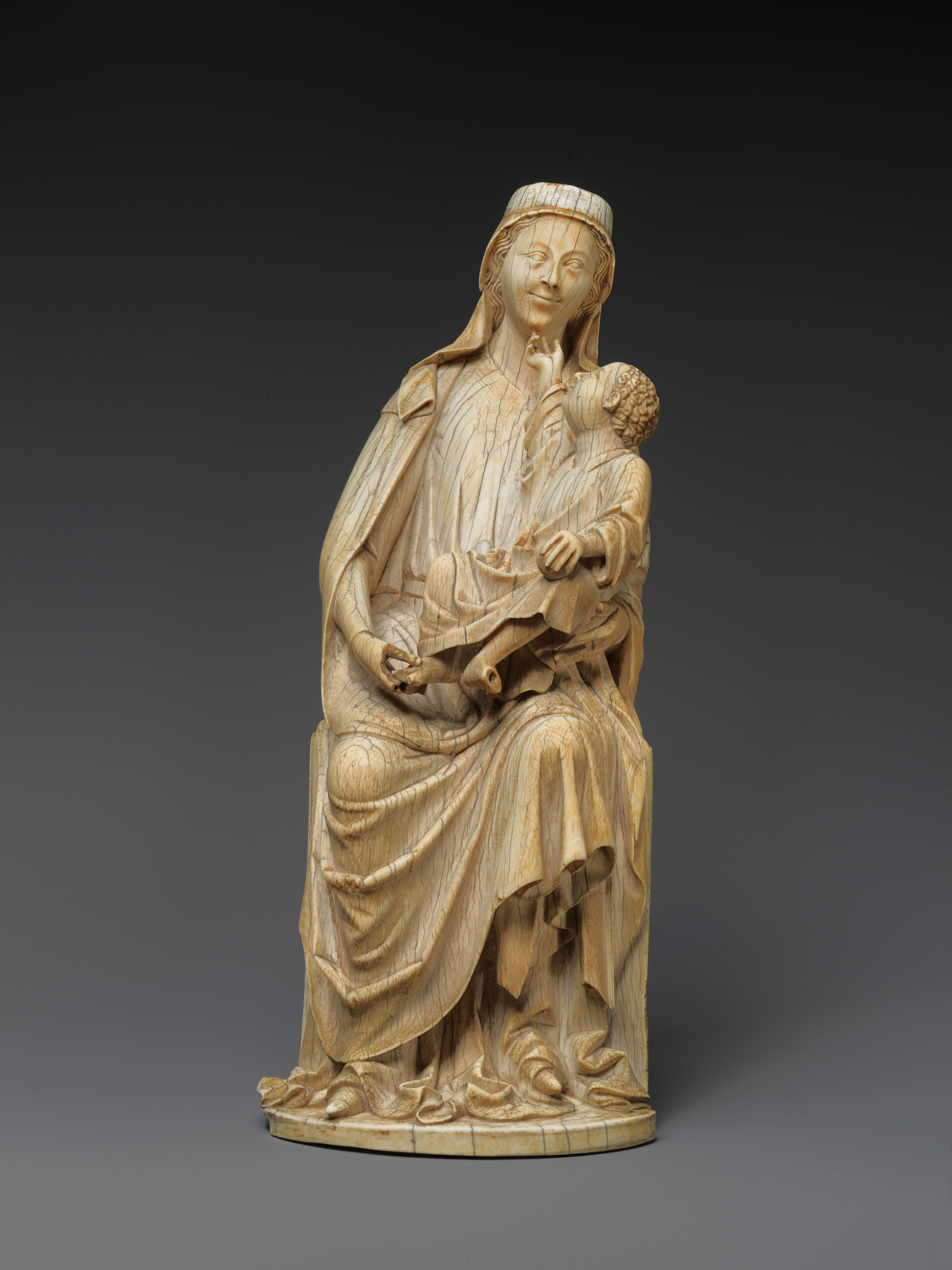
Virgin and Child
Doctrinal reflection
This statuette of the Virgin and Child, dated to approximately 1250 AD, is a North French Gothic ivory carving executed in elephant ivory, now housed in the Medieval Art collection of the Metropolitan Museum of Art (gift of J. Pierpont Morgan, 1917). While the object is a Gothic Western European work rather than a Byzantine artifact in the strict sense, it participates in a shared theological and iconographic tradition rooted in Byzantine Marian imagery, particularly the Hodegetria and Eleusa types that profoundly influenced Western medieval devotional objects from the twelfth century onward. The statuette presents the Virgin in the characteristic Gothic contrapposto sway, cradling the Christ Child, a compositional formula traceable to Byzantine models transmitted through ivory carving workshops and panel painting. Theologically, the image encodes the doctrine of the Theotokos—Mary as God-bearer—while the intimate turn between mother and child evokes the Eleusa (Tenderness) iconographic tradition. The use of elephant ivory signals luxury production for aristocratic or ecclesiastical patronage. Scholarly interest in this object centers on the transmission of Byzantine iconographic programs into the Latin West during the High Gothic period, the organization of Parisian ivory workshops, and the materiality of ivory as a prestige medium. The statuette's stylistic refinement aligns with documented Parisian production centers active under the reign of Louis IX. Its provenance through the Morgan collection ensures its significance in the historiography of medieval collecting. Sources: Gesta (International Center of Medieval Art); Speculum (Medieval Academy of America); Metropolitan Museum of Art Bulletin.