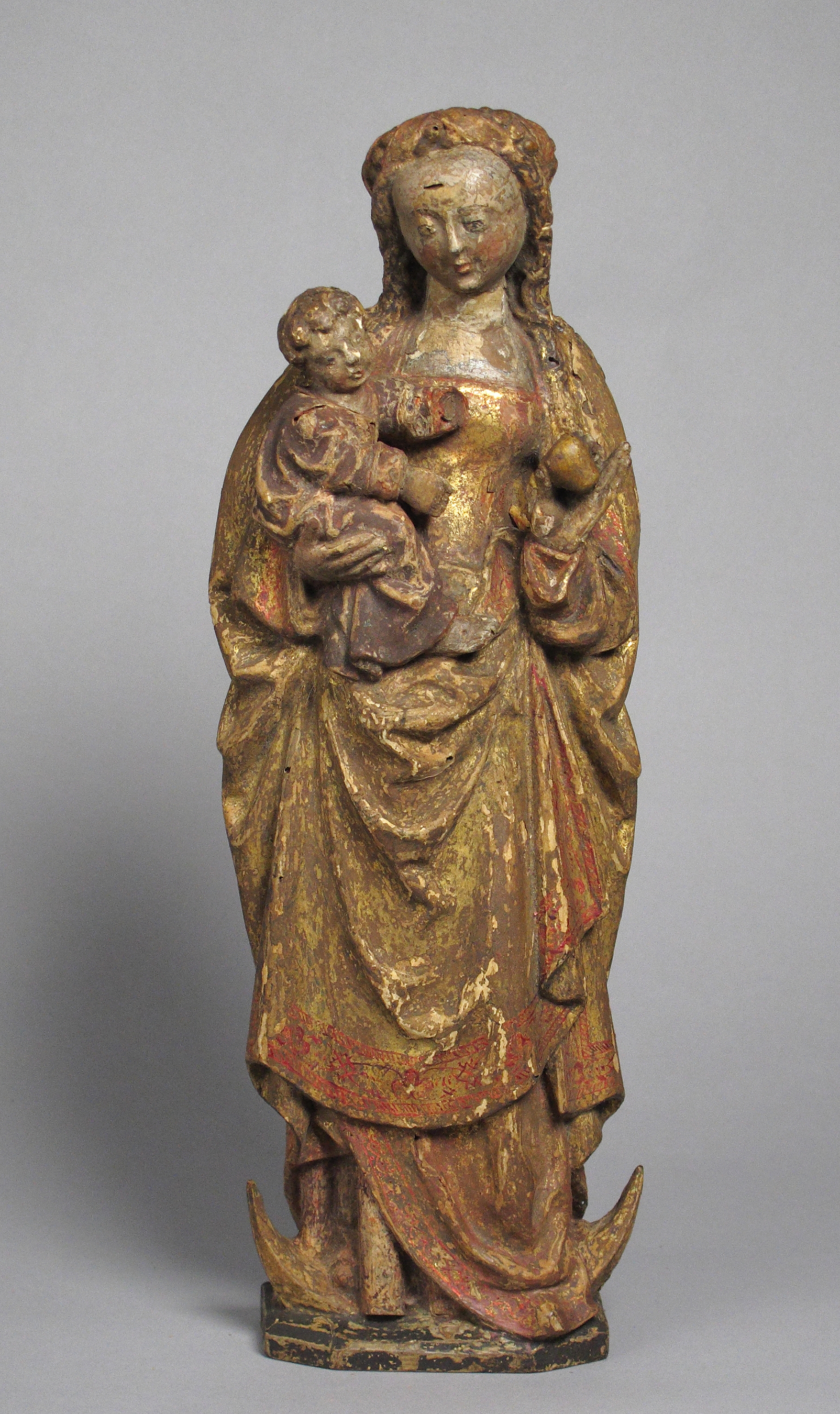
Virgin and Child
Doctrinal reflection
This statuette of the Virgin and Child is a South Netherlandish oak sculpture, painted and gilded, dating to the early sixteenth century AD, held in the Metropolitan Museum of Art's Medieval Art collection (Gift of J. Pierpont Morgan, 1916). Its classification requires qualification: this is a Western European devotional sculpture of the late Gothic Low Countries, not a product of Byzantine artistic culture, though its composition descends from the Byzantine Hodegetria type — the Virgin presenting the Christ Child — transformed by Gothic naturalism, contrapposto posture, and soft Netherlandish drapery. The painted and gilded surface reflects Flemish and Brabantine practice rather than the encaustic, tempera, or tesserae techniques of Byzantine image-making. What the image teaches should be stated with the Bible open. The composition's enduring strength is christological: the mother presents the child, and the child — not the mother — is the point. Theotokos, 'God-bearer,' affirmed at the Council of Ephesus in AD 431, guards exactly that: the child Mary bore is God the Son (Luke 1:43; Matthew 1:23). But the devotional world that produced this statuette had gone further, presenting Mary as a heavenly intercessor to whom prayer was properly addressed. That is later Catholic tradition, not biblical teaching: Scripture records Mary asking her son, never being asked in his place, and names one mediator between God and men, the man Christ Jesus (1 Timothy 2:5). The work is best situated within the corpus of South Netherlandish devotional objects produced for private and parish use, where such images instructed the eye of ordinary worshippers far more often than any text they could not read. Sources: Metropolitan Museum of Art Bulletin; Journal of the Warburg and Courtauld Institutes; Gesta.