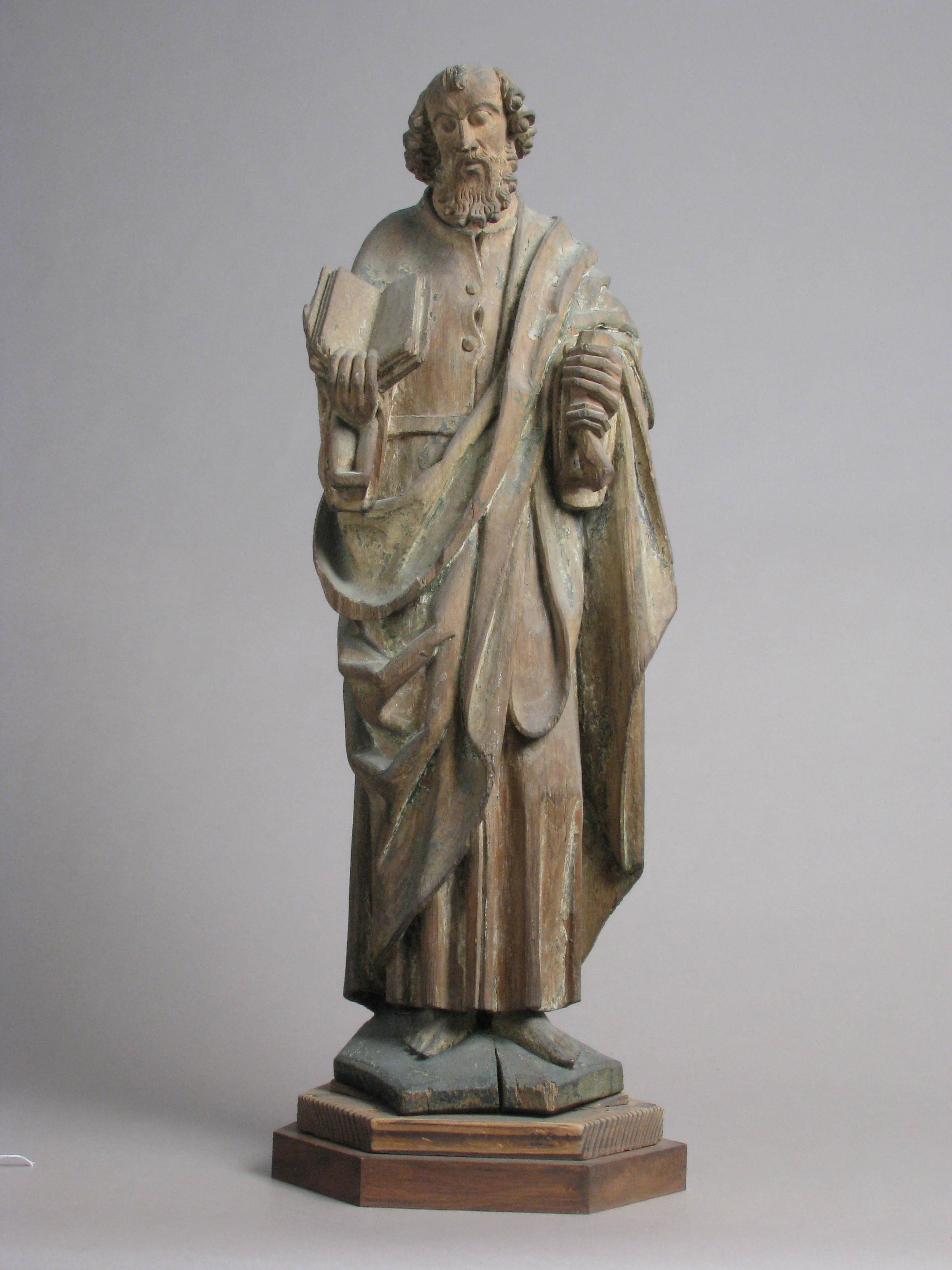
Saint Peter
Doctrinal reflection
This entry presents a methodological boundary case for the Scriptorium archive: the object in question is a North Netherlandish oak statuette of Saint Peter, dated to circa 1500 AD, held in the Medieval Art collection of the Metropolitan Museum of Art (Gift of J. Pierpont Morgan, 1916). While the subject matter—Saint Peter as apostolic prince, identifiable through standard iconographic attributes such as the keys of heaven (Matthew 16:19) and probable episcopal or papal vestiture—falls within the broader Christian devotional tradition that Byzantine art also serves, the object itself is categorically Northern European Late Gothic sculpture, not Byzantine. It belongs to the Flemish or broader South Netherlandish/North Netherlandish workshop tradition operating under Gothic naturalism and Burgundian courtly influence, entirely outside the geographical, liturgical, and stylistic parameters of Byzantine icon production. The medium of polychromed and gilded oak statuette corresponds to no Byzantine medium category (mosaic, fresco, panel icon, manuscript). The theological program—Petrine apostolic authority, keys imagery, intercessory sainthood—is shared broadly across Latin and Byzantine Christianity, but the formal vocabulary is wholly Western. Assigning Byzantine era, medium, or iconographic classification to this object would constitute a categorical error. Archivists are advised to redirect this entry to a Medieval Western European sculpture catalogue. The object's significance lies in Late Gothic devotional sculpture production in the Low Countries, not in Byzantine pictorial theology. Sources: Steyaert, J., Late Gothic Sculpture: The Burgundian Netherlands (1994); Williamson, P., Gothic Sculpture 1140–1300 (1995); Metropolitan Museum of Art Bulletin, Medieval collections documentation.