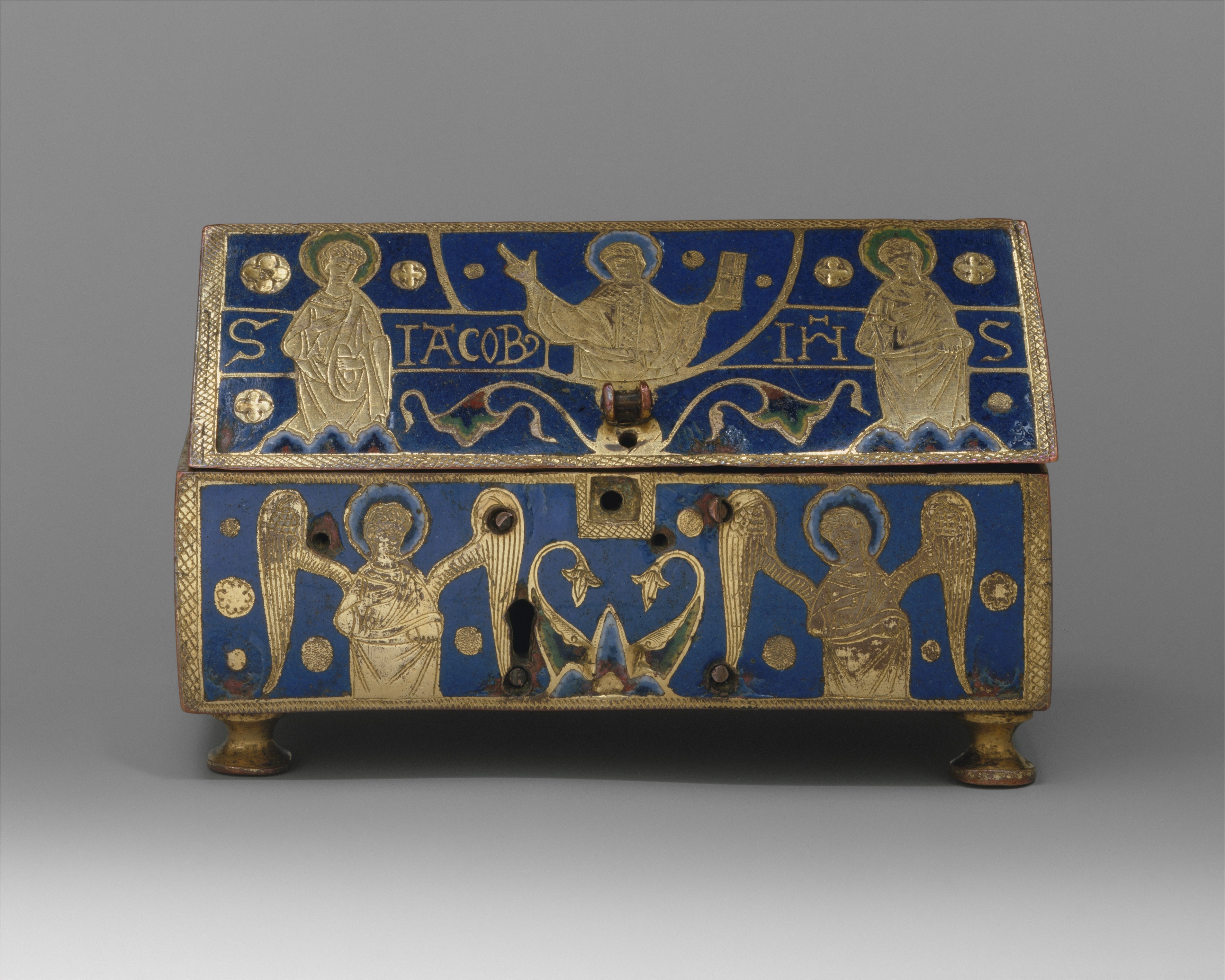
Reliquary
Doctrinal reflection
This chasse reliquary, produced in France circa 1200–1220 AD, represents the mature output of Romanesque champlevé enamel workshops, most likely associated with the Limoges tradition, which dominated European liturgical metalwork production throughout the twelfth and early thirteenth centuries AD. The chasse form—a house-shaped casket designed to contain corporeal relics or contact relics of saints—constitutes one of the defining artifact types of medieval sacred material culture. Executed in gilded copper with champlevé enamel, the object exemplifies the technical refinement of Limousin craftsmen: copper fields are excavated, filled with powdered glass frit in polychrome hues, and fired, producing luminous color fields set against gilded raised metal lines delineating figural and ornamental programs. Iconographic schemes typical of such chasses include narrative cycles of a patron saint's martyrdom on lateral panels, a Maiestas Domini or Crucifixion on the roof ridge, and attendant apostolic or angelic figures framing the primary compositions. The theological program positions the relic casket as a material locus of sanctity, visually asserting the saint's intercessory power and the church's custody of salvific contact with the divine. Scholarly attention to this class of objects has focused on workshop attribution, enamel typology, and the economic networks sustaining Limoges export production across Latin Christendom. The Metropolitan Museum's Benjamin Altman bequest preserves a significant concentration of such material, enabling comparative study of stylistic evolution within the genre. The object engages broader questions of relic theology, the cult of saints, and the intersection of liturgical function with artistic patronage in high medieval France. Sources: Gesta; Cahiers de civilisation médiévale; The Burlington Magazine.