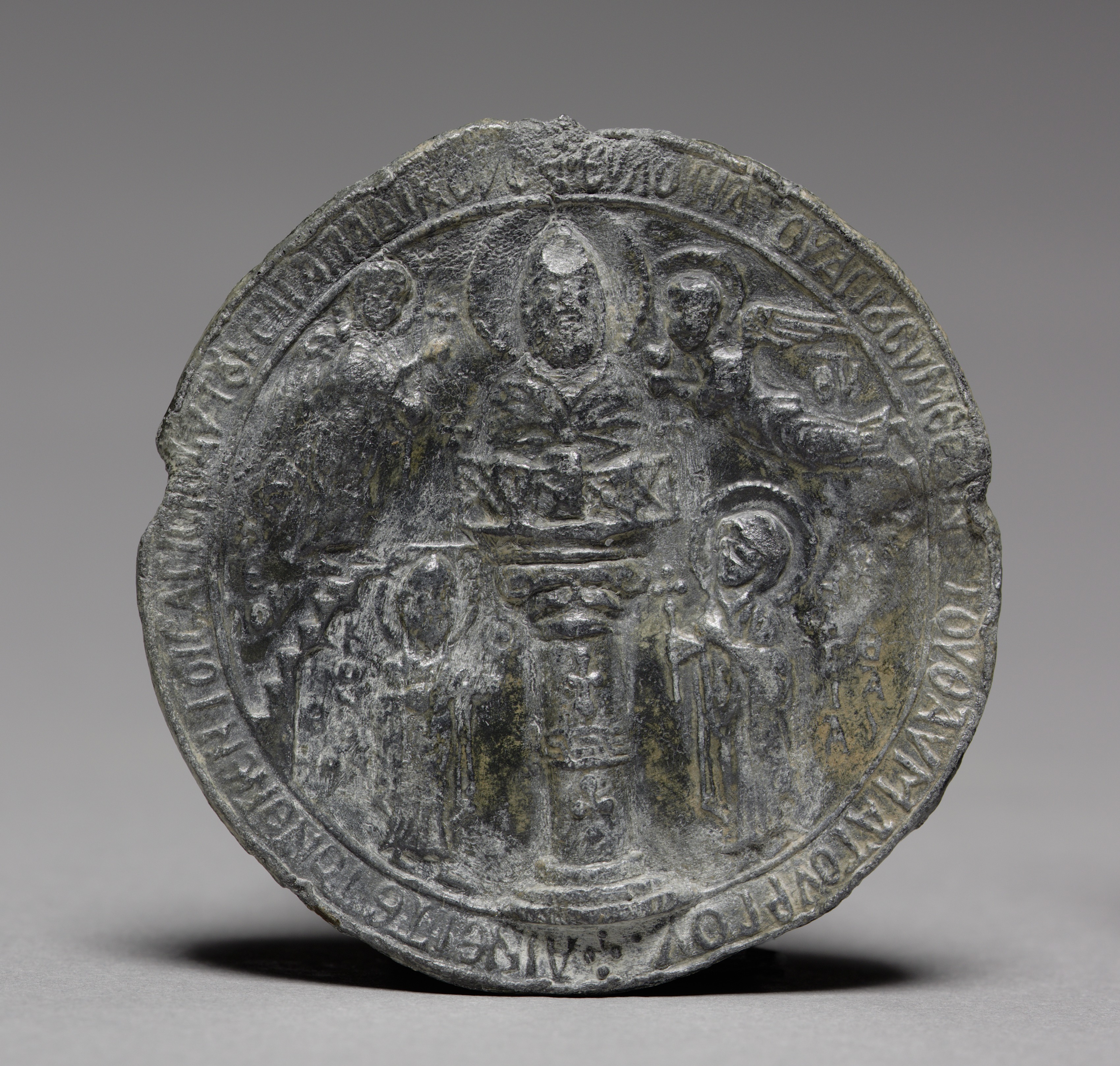
Pilgrim's Medallion with Saint Symeon the Younger
Doctrinal reflection
This lead pilgrim's medallion, dated to approximately 1100 AD and held at the Cleveland Museum of Art, represents Saint Symeon the Younger Stylites (521–592 AD), the Syrian ascetic who spent decades atop a column near Antioch on the Wondrous Mountain. The object belongs to the broader category of eulogia—devotional tokens produced at major Syrian pilgrimage shrines and distributed to the faithful as tangible blessings carrying the sanctity of the holy site. The iconographic program is straightforwardly identifiable: Symeon is depicted standing or praying upon his column, a compositional formula well established in Syrian pilgrimage art from at least the fifth century AD and persisting through the Comnenian period. The column itself functions as a theological sign, conflating the ascetic's physical elevation with spiritual proximity to the divine. Stylite imagery in this format participates in a semiotics of protective power; the medallion's material humility (lead) contrasts deliberately with its apotropaic function, worn or carried by pilgrims as a defense against illness and misfortune. Scholars have situated these objects within the broader economy of sacred contact relics, noting that lead eulogia from Syrian Stylite shrines constitute some of the most archaeologically abundant evidence for popular Byzantine piety outside the major urban centers. The Comnenian date places this example in a period of renewed Byzantine engagement with Syrian holy sites, though the iconographic type itself preserves earlier, pre-Iconoclastic conventions with remarkable stability. The piece is significant for hagiographic, pilgrimage-studies, and material-culture scholarship alike. Sources: Dumbarton Oaks Papers; Byzantine and Modern Greek Studies; Journal of Roman Archaeology.