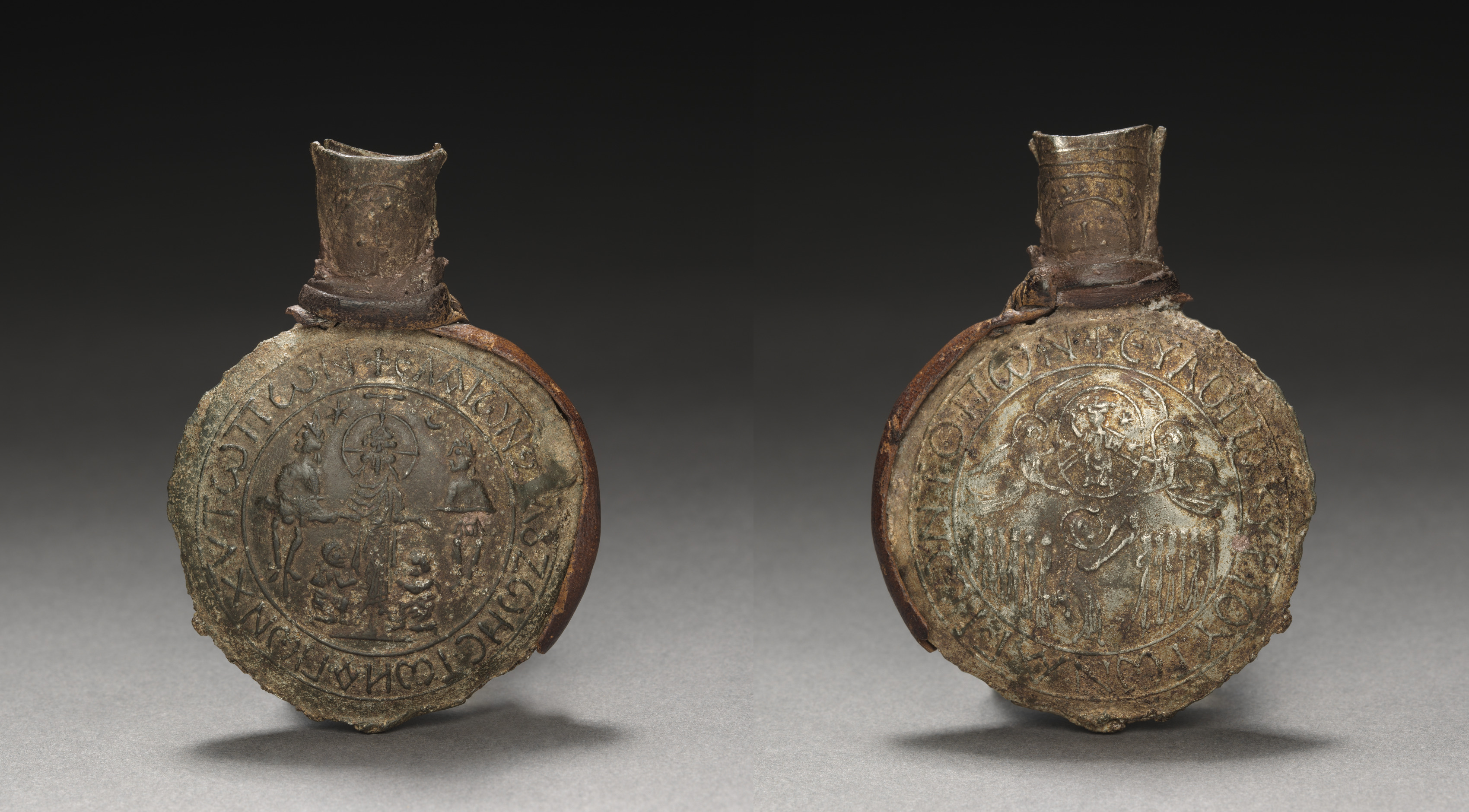
Pilgrim's Ampulla with Scenes of the Crucifixion (front) and the Ascension (back)
Doctrinal reflection
This tin-lead alloy pilgrim's ampulla, dated to approximately AD 600, belongs to the well-documented corpus of loca sancta devotional objects produced in Byzantine Palestine, most likely in Jerusalem or its environs. The 'Monza-Bobbio' designation derives from the two principal Italian findspot caches—the treasury of the cathedral of Monza and the monastery of Bobbio—where comparable examples were preserved, arguably brought by Queen Theodelinda and other Lombard-period pilgrims. The Cleveland example preserves leather fragments consistent with a suspension cord, indicating use as a reliquary container for sanctified oil or water drawn from holy sites. The obverse carries a Crucifixion composition in which Christ typically appears robed and alive on the cross, flanked by the two thieves and attendant figures, reflecting pre-iconographic conventions predating the suffering-Christ typology dominant in later Byzantine art. The reverse Ascension scene follows a hierarchical schema: the mandorla-enclosed ascending Christ above a register of apostles and the Theotokos in orant posture, consistent with the apse program at the Church of the Ascension on the Mount of Olives. Iconographically, the pairing of Crucifixion and Ascension encapsulates core soteriological theology—descent into death and triumphant return to the Father. These ampullae are primary evidence for the dissemination of a standardized Palestinian iconographic repertoire across the early Byzantine world prior to the Islamic conquest of Jerusalem in AD 638. Kurt Weitzmann's foundational work on loca sancta imagery and Gary Vikan's studies of pilgrimage art remain essential analytical frameworks for this object class. Sources: Dumbarton Oaks Papers; Journal of the Walters Art Museum; Byzantine and Modern Greek Studies.