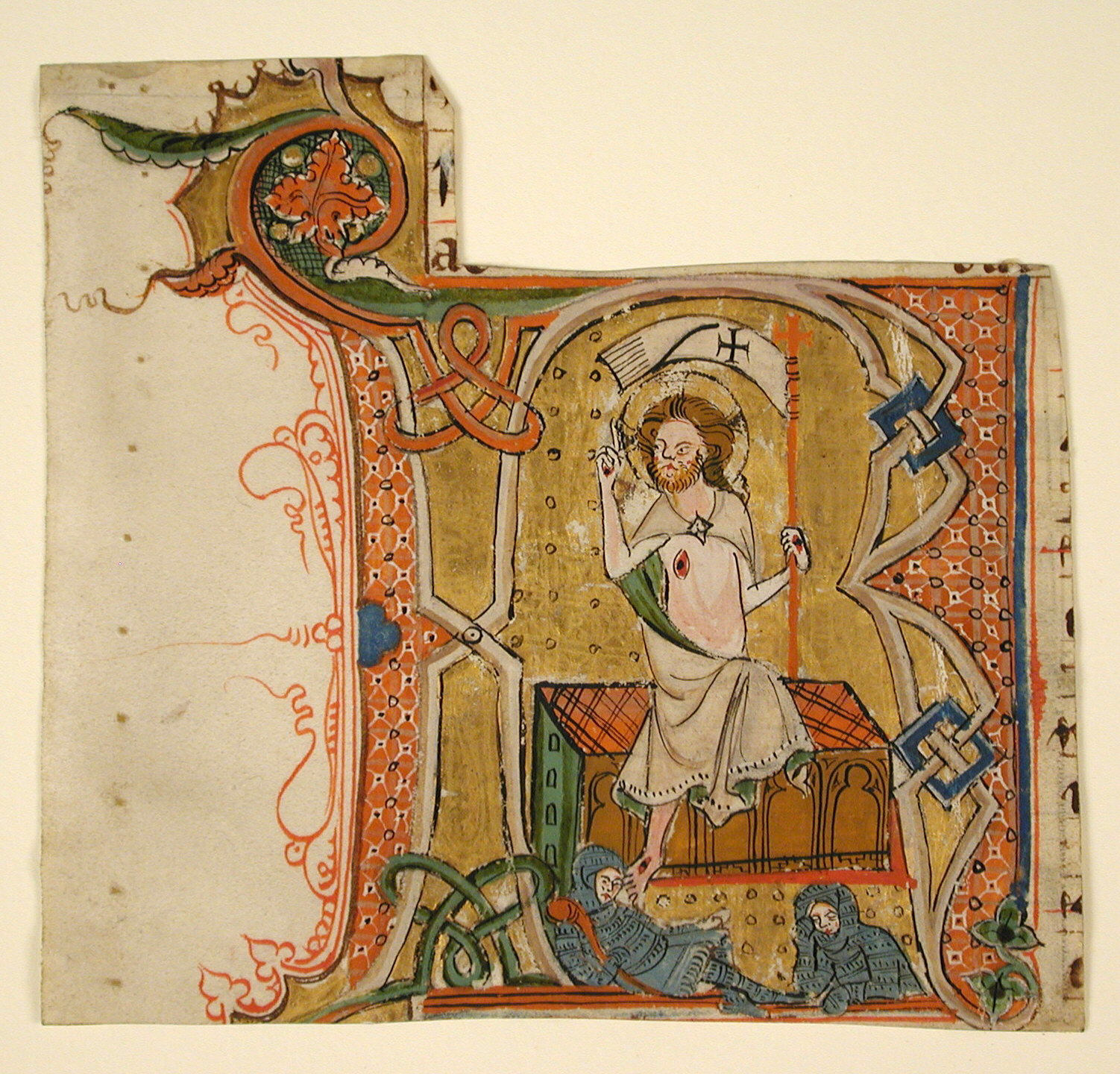
Manuscript Leaf Showing an Illuminated Initial R with The Resurrection
Doctrinal reflection
This manuscript leaf, dated to the late thirteenth century AD and attributed to a Rhenish workshop, presents an illuminated initial 'R' enclosing a Resurrection scene executed in tempera, ink, and metal leaf on parchment. The work entered the Metropolitan Museum of Art's Medieval Art collection as a gift from Bashford Dean in 1923. The Rhenish attribution places the leaf within the flourishing scriptoria of the Rhine Valley region, where Gothic illumination developed distinctive characteristics including richly burnished metal leaf grounds, refined figural elongation, and vibrant polychrome palette. The historiated initial format—here the letter 'R' serving as an architectural and pictorial frame—is a canonical feature of thirteenth-century liturgical and devotional manuscript production, typically appearing in antiphonaries, graduals, or breviaries at the incipit of an Easter or Vigil text. The Resurrection iconography most likely depicts the Anastasis (Harrowing of Hell) or the angel at the empty tomb, both standard programs for such liturgical contexts in Western medieval manuscripts of this period, though Byzantine compositional influence on Rhenish illumination via intermediary channels remains a subject of scholarly interest. The metal leaf background evokes the luminous gold grounds characteristic of Byzantine panel and mosaic traditions, underscoring the transnational visual vocabulary of medieval sacred art. The leaf's modest scale belies the precision of its execution, representing the high craft standards of late thirteenth-century AD German manuscript ateliers. Sources: Speculum: A Journal of Medieval Studies; Gesta (International Center of Medieval Art); Journal of the Walters Art Museum.