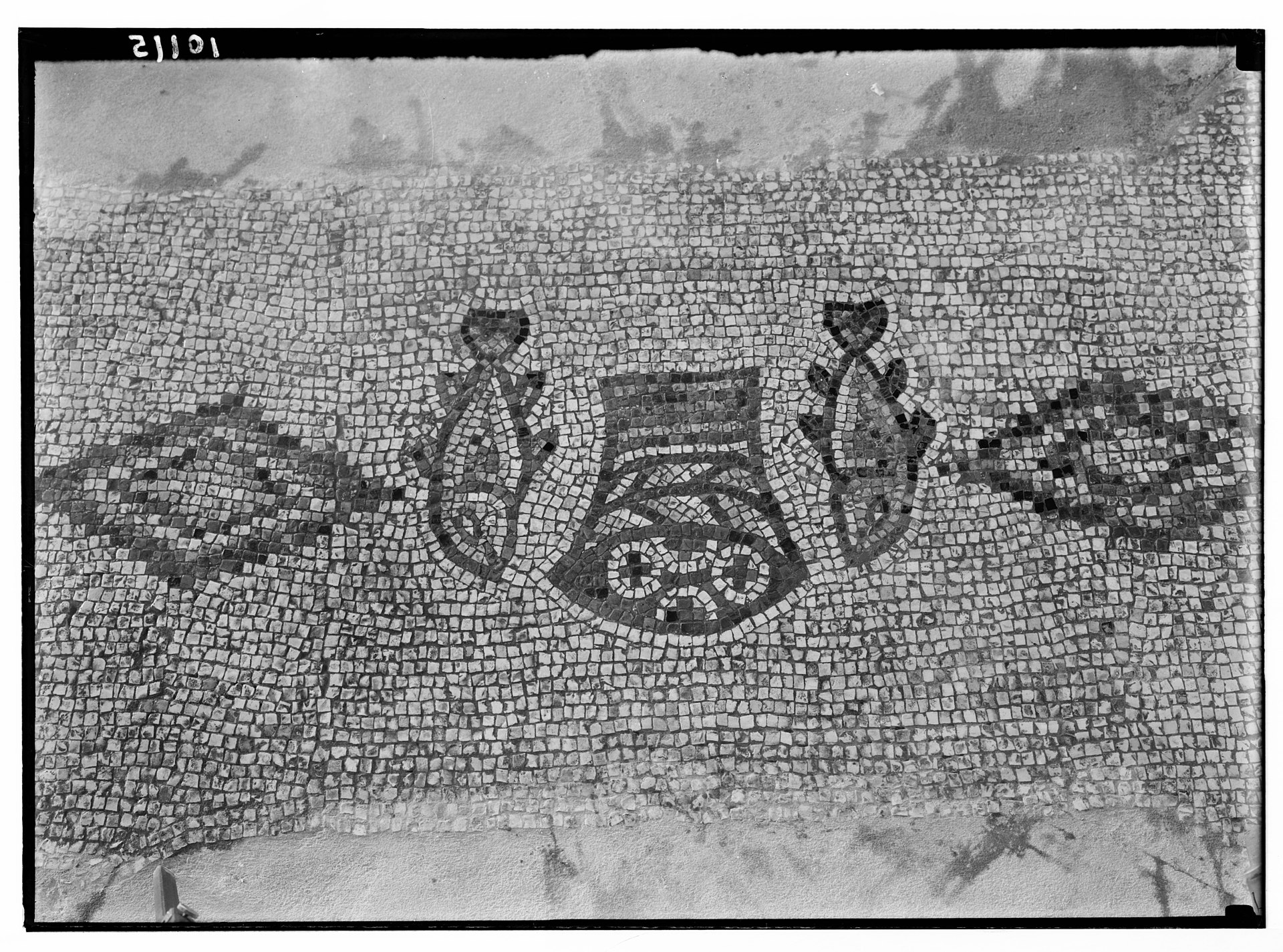
Loaves and Fishes Mosaic, Tabgha
Doctrinal reflection
The Loaves and Fishes Mosaic at Tabgha, dateable to the late 5th century AD, is preserved in situ on the sanctuary floor of the Church of the Multiplication of the Loaves and Fishes (also known as the Church of Heptapegon) at the northwestern shore of the Sea of Galilee. The mosaic belongs to a larger decorative program of floor mosaics featuring Nilotic landscapes, waterfowl, and flora characteristic of late antique eastern Mediterranean workshop traditions, yet the eucharistic emblem before the altar occupies a position of singular theological prominence. The composition is deliberately austere: a wicker basket containing four loaves is flanked symmetrically by two fish rendered in tessellated stone. The basket holds four rather than five loaves, a detail frequently noted by scholars as either a deliberate reference to the four Gospels or a liturgical accommodation to the Eucharist celebrated directly above. The fish are depicted with naturalistic attention while remaining iconographically legible as symbols of Christ (ΙΧΘΥΣ) and of the miracle itself. Theologically, the image operates on simultaneous registers—historical commemoration of the feeding of the five thousand, eucharistic typology, and eschatological anticipation of the messianic banquet. The locus sacra function is critical: pilgrims visiting the site from at least the 4th century AD associated this spot with the Gospel narrative, and the mosaic translates that topographical memory into permanent liturgical art. The restraint of the design—eschewing figural narrative in favor of symbolic shorthand—reflects broader early Christian reluctance to depict Christ performing miracles directly, preferring emblematic programs legible to the initiated. Sources: Ovadiah, Asher, Corpus of the Byzantine Churches in the Holy Land (1970); Piccirillo, Michele, The Mosaics of Jordan (1993); Kitzinger, Ernst, Israeli Mosaics of the Byzantine Period (1965).