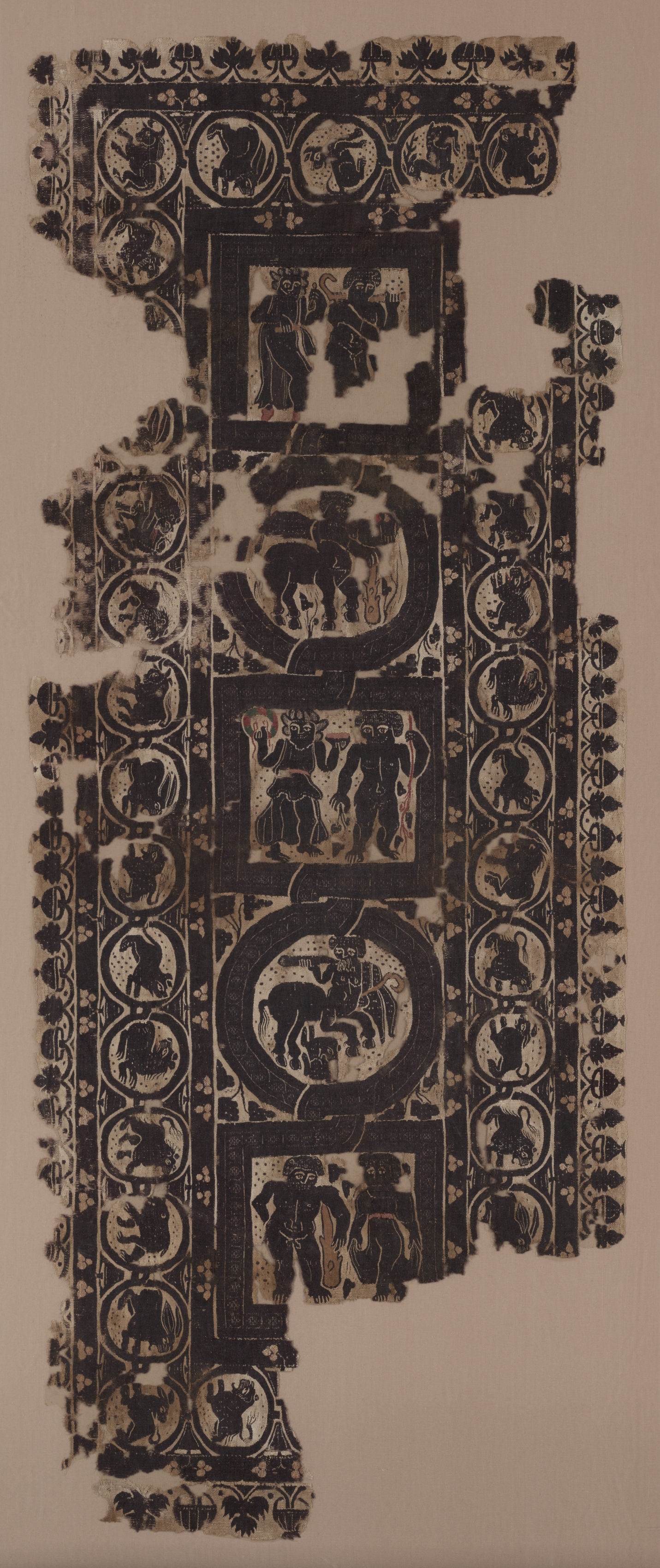
Curtain Panel with Scenes of Merrymaking
Doctrinal reflection
This large tapestry-woven curtain panel, dateable to the sixth century AD and produced in Byzantine Egypt, exemplifies the sustained vitality of classicizing and mythological iconographic programs within a nominally Christian material culture. Executed in linen (undyed ground) with dyed wool in tapestry weave supplemented by weft wrapping, the panel originally formed one component of a composite hanging, alternating with plain linen sections in a wider curtain arrangement. The work is organized into three square compartments framed by roundels containing centaurs—liminal, hybrid figures carrying deep classical resonance. The central compartment features Dionysus holding a grapevine and a fatigued Hercules leaning on his club, a pairing well attested in late antique decorative programs linking divine vitality with heroic exhaustion. Flanking squares present nude male figures alongside dancing females in diaphanous garments, a motif connecting the panel to the broader thiasos tradition. Purple dyeing, almost certainly derived from costly sources, signals elite patronage and the conspicuous display of wealth, as does the inclusion of lions, bulls, and hares in the animal registers—fauna accessible only to economically dominant households. The panel resists straightforward Christianization: its iconographic vocabulary remains emphatically pagan, consistent with sixth-century Egyptian elite domestic and ceremonial contexts where classical imagery retained prestige independent of theological content. The object thus occupies a scholarly intersection between late antique textile studies, the persistence of polytheistic visual culture under Christian rule, and the luxury economy of Byzantine Egypt. Now housed at the Cleveland Museum of Art. Sources: Dumbarton Oaks Papers; Journal of Coptic Studies; Late Antique and Medieval Studies (Cleveland Museum of Art bulletin series).