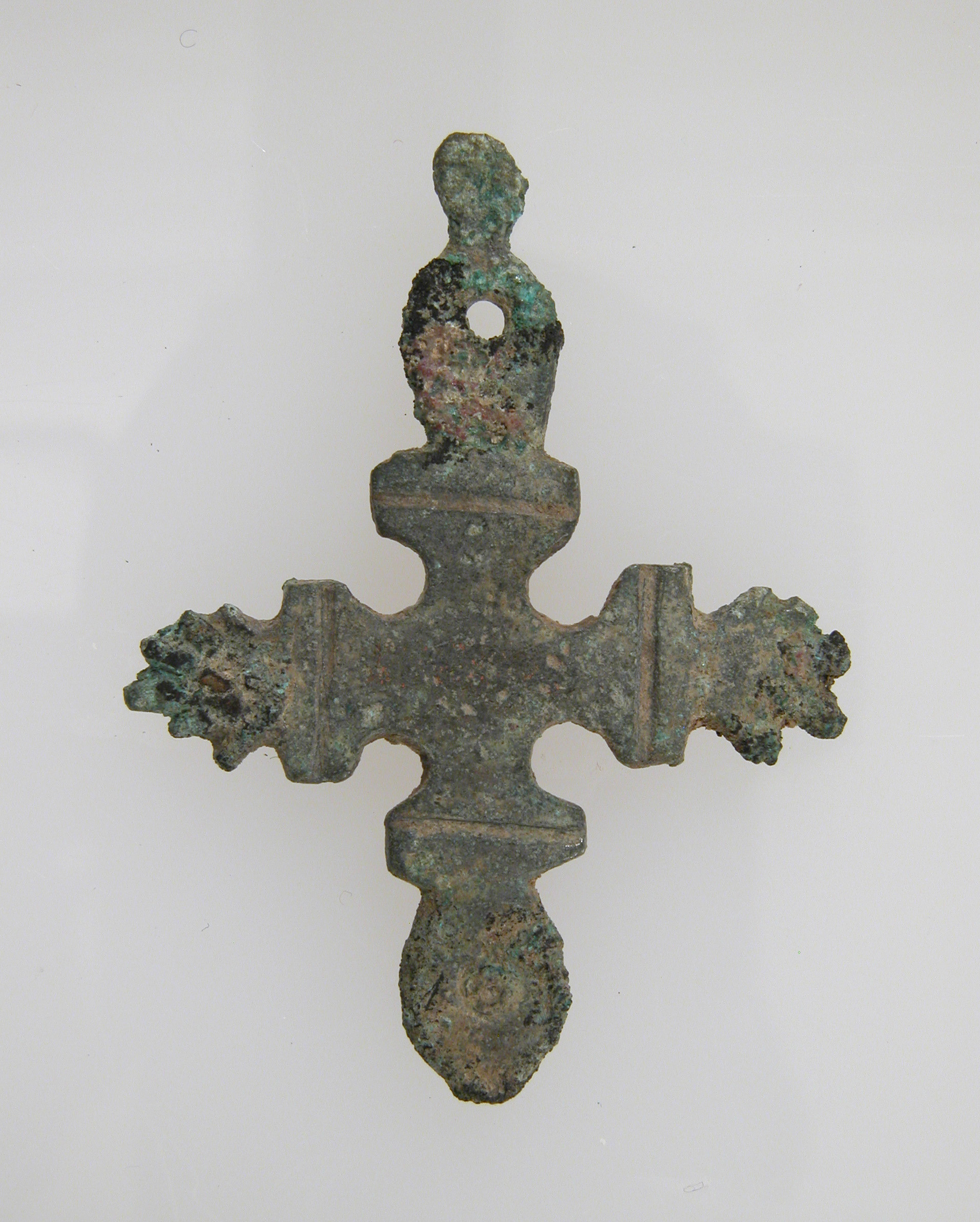
Cross
Doctrinal reflection
This small copper-alloy cross, dated to the sixth century AD and attributed to Frankish production in what is now Germany, represents an early medieval metalwork tradition that bridges late antique Roman craft practices with emerging Germanic Christian material culture. The object is housed in the Medieval Art collection of the Metropolitan Museum of Art, acquired through the Gift of J. Pierpont Morgan in 1917. Frankish crosses of this period functioned variously as processional fittings, personal devotional objects, or grave goods, and the specific use of this example cannot be determined without closer physical examination of suspension loops, wear patterns, or associated find context. Copper alloy — likely a leaded bronze — was the workhorse metal of early medieval ecclesiastical minor arts, accessible where silver and gold were not. The sixth century AD in the Frankish realm coincides with the consolidation of Merovingian Christianity following Clovis I's baptism (traditionally dated c. AD 496–508 by Frankish tradition, though the precise year remains debated by scholars). The cross form itself carries no narrative program; it functions as pure christological symbol, referencing the crucifixion and resurrection without depicting them — consistent with pre-Carolingian Western practice, which was slower than the Byzantine East to adopt the crucifix image. Iconographically this places the object in the aniconic early cross tradition rather than the developed crucifix tradition that emerges more confidently after the seventh century AD. Its scholarly significance lies in documenting the material Christianization of Germanic Europe at the grassroots level of portable metalwork. Sources: Metropolitan Museum of Art Bulletin; Journal of the British Archaeological Association; Cahiers archéologiques.