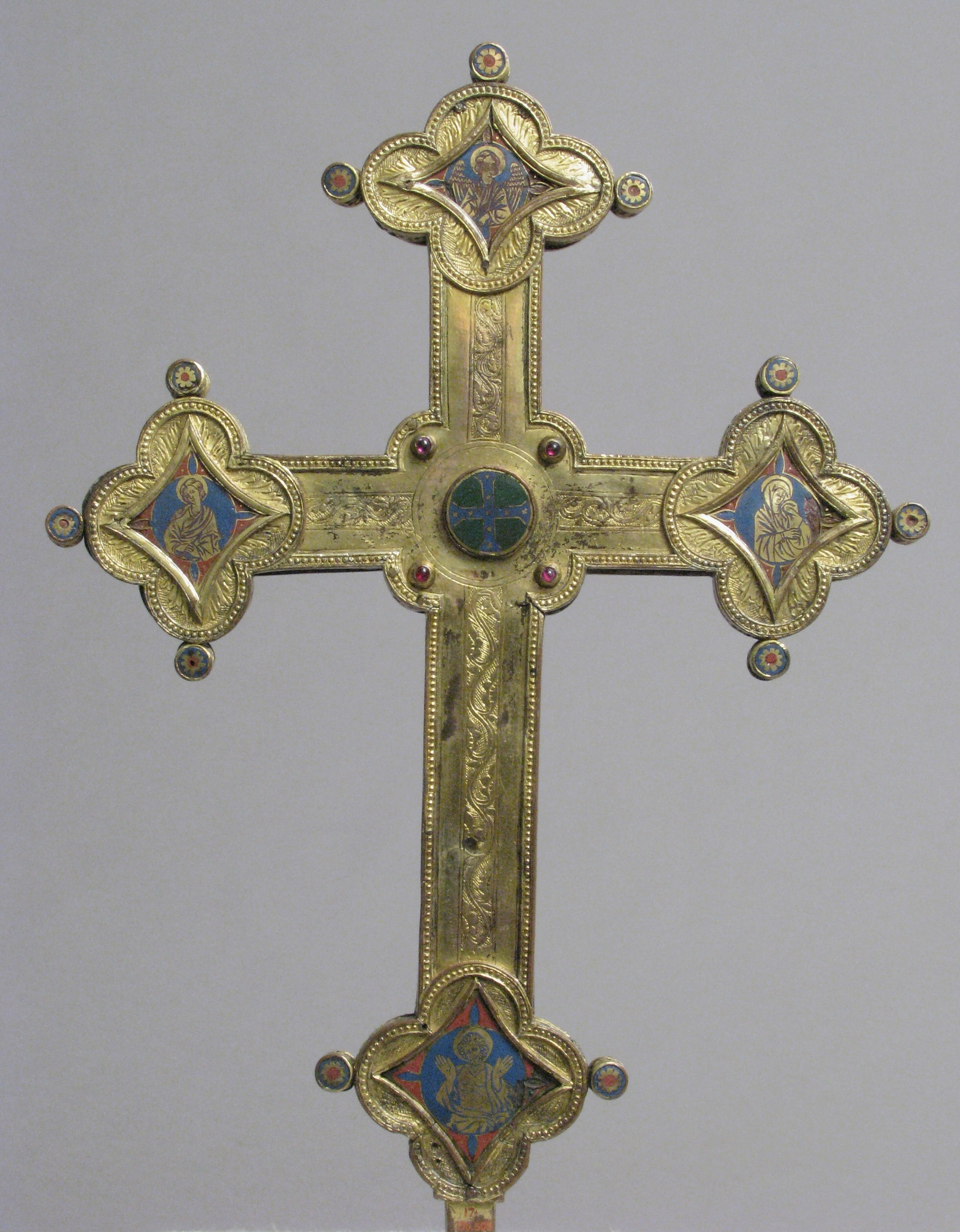
Cross
Doctrinal reflection
This processional or altar cross, held in the Medieval Art collection of the Metropolitan Museum of Art (Gift of J. Pierpont Morgan, 1917), is dateable on stylistic and technical grounds to the 14th–15th century AD and is attributed to Italian manufacture. The object is constructed of gilded copper worked in champlevé enamel — a technique in which recessed channels are cut into the metal ground and filled with vitreous paste before firing — and further embellished with glass and stone cabochons set in raised mounts. Italian champlevé production of this period drew on earlier Mosan and Limoges traditions while incorporating Italianate compositional sensibilities, including greater attention to figural articulation and decorative integration of gem-like elements whose lustrous surfaces carried symbolic reference to the Heavenly Jerusalem (Revelation 21:18–21). The cross form itself is the primary theological statement: the instrument of crucifixion recast as a sacred object through material splendor, signaling the paradox of glory through suffering central to Pauline proclamation (1 Corinthians 1:18; Galatians 6:14). Cabochons placed at the terminal arms and central crossing follow a convention traceable to Early Christian and Carolingian crux gemmata typology, in which jeweled crosses evoke both the Passion and the eschatological reign of Christ. Without surviving documentation of original commission or liturgical context, attributions of patron iconography or specific iconographic program remain speculative; the object's function — likely processional or altar use — is inferred from its scale and structural type. The champlevé technique and gilded copper substrate situate it within a broad category of medieval Italian metalwork that merits ongoing comparative study. Sources: Metropolitan Museum of Art Bulletin; Gauthier, Marie-Madeleine, Émaux du moyen âge (1972); Stratford, Neil, Catalogue of Medieval Enamels in the British Museum (1993).