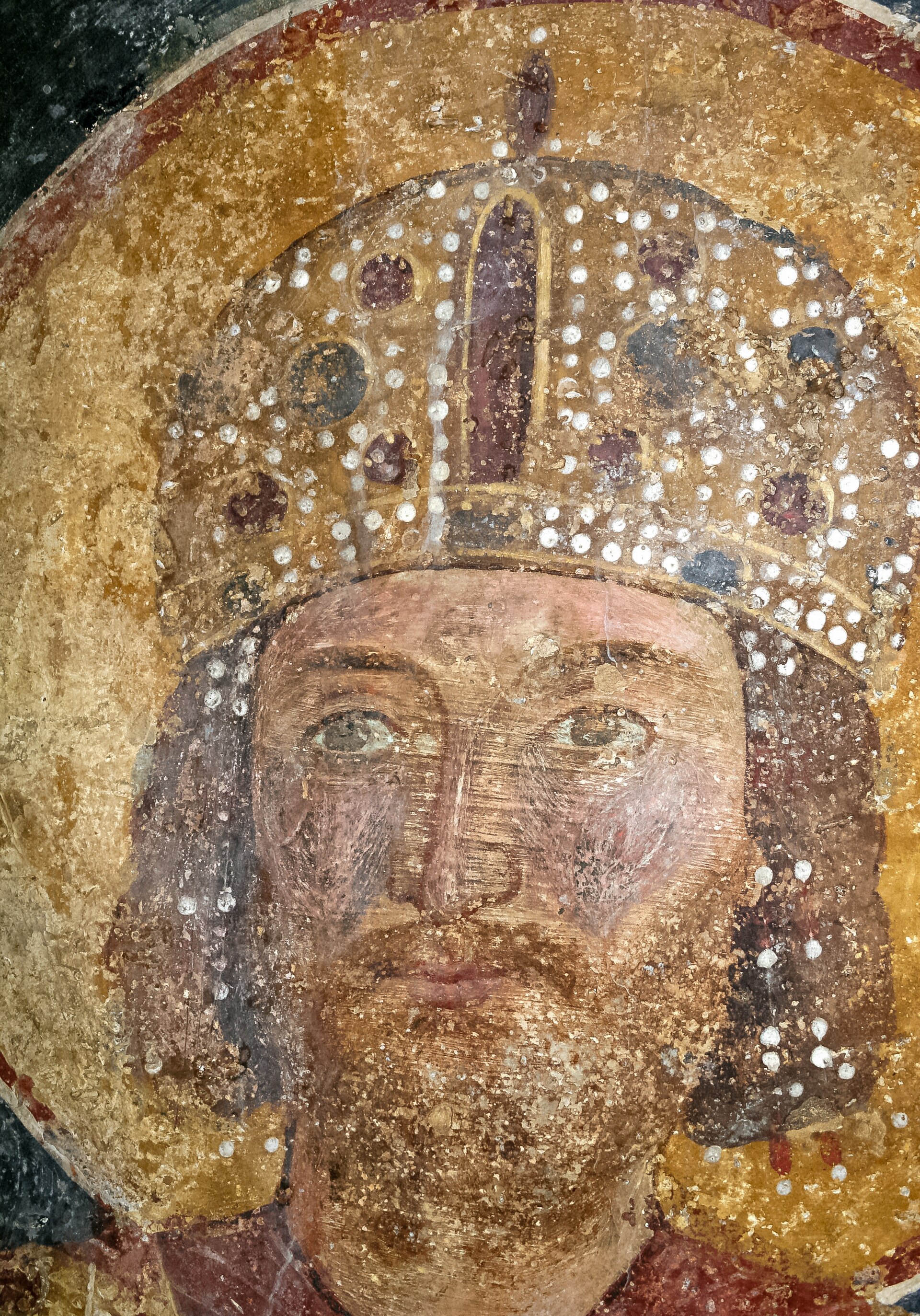
Tsar Constantine Tikh Asen (Boyana)
Doctrinal reflection
The ktetor portrait of Tsar Constantine Tikh Asen forms part of the celebrated fresco cycle executed in AD 1259 at Boyana Church, located on the outskirts of Sofia, Bulgaria, a monument now inscribed on the UNESCO World Heritage List. Painted in secco and fresco technique on the interior walls of the church's narthex, the cycle was commissioned under the patronage of the sebastokrator Kaloyan and his wife Desislava, with the Bulgarian tsar and his consort Irina depicted as co-donors of the extended building program. Constantine Tikh Asen, who ruled Bulgaria from AD 1257 to 1277, appears in full imperial regalia—loros, crown, and scepter—in a formulaic posture of presentation adapted from Byzantine court ceremonial and donor iconography. The composition belongs squarely within the Middle Byzantine tradition of ktêtôr portraiture, wherein a ruler legitimizes his reign by presenting a model of the church to Christ or a patron saint, visually encoding the theological principle that earthly sovereignty derives from and remains accountable to divine authority. What distinguishes the Boyana cycle, and this portrait within it, is the marked individualization of facial features: the tsar's physiognomy departs from the hieratic flatness normative to contemporaneous Byzantine practice, suggesting either local workshop innovation or contact with proto-naturalist currents in the wider thirteenth-century Mediterranean world. Scholars have consistently debated whether this naturalism anticipates Italian Trecento developments independently or reflects shared trans-regional impulses. The Boyana portraits thus occupy a pivotal position in the historiography of medieval Balkan and Byzantine art. Sources: Zbornik za likovne umetnosti (Matica srpska); Dumbarton Oaks Papers; Byzantinoslavica.