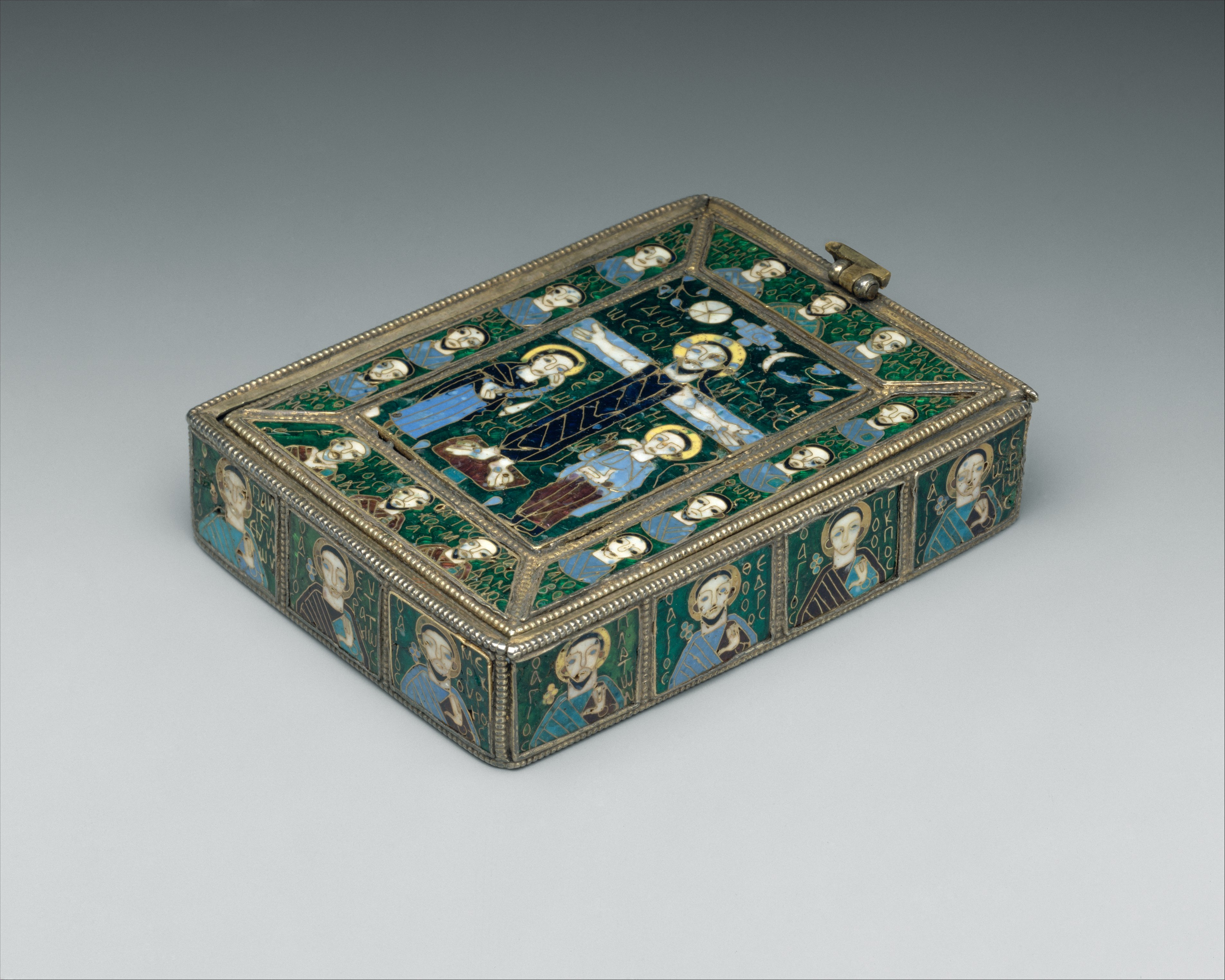
The Fieschi Morgan Staurotheke
Doctrinal reflection
The Fieschi Morgan Staurotheke is among the most celebrated Byzantine reliquaries in Western collections, housed in the Metropolitan Museum of Art (acc. no. 17.190.715) through the gift of J. Pierpont Morgan in 1917. Dated to the early ninth century AD and likely produced in Constantinople between the two phases of Iconoclasm (AD 730–787 and 815–843), the staurotheke — a box made to enshrine a purported fragment of the True Cross — exemplifies middle Byzantine luxury metalwork: gilded silver with cloisonné enamel and niello, techniques refined in the capital's imperial workshops. The exterior lid displays the Crucifixion with attendant figures; the interior compartments are framed by standing saints and apostles in fine cloisonné. The theology the object embodies should be described precisely. Its makers designed relic and image to work together in veneration — the relic touched and processed, the saints invoked as intercessors — a devotional logic Byzantine practice built on fourth-century foundations such as Cyril of Jerusalem's lectures on the cross-relics and the Helena tradition of the Cross's discovery. That practice is documented here honestly as history, not commended as biblical teaching: Scripture glories in the cross for the atoning death accomplished on it (1 Corinthians 1:18; Colossians 1:20) and names one mediator between God and men, the man Christ Jesus (1 Timothy 2:5). The wood was never the power. The object's name records its medieval ownership by the Fieschi family of Genoa; scholarship has centered on its dating relative to the Iconoclast controversy, workshop attribution, and parallels with the Limburg Staurotheke. It remains a primary document of post-Iconoclast sacred metalwork. Sources: Dumbarton Oaks Papers; Arte Medievale; Metropolitan Museum Journal.