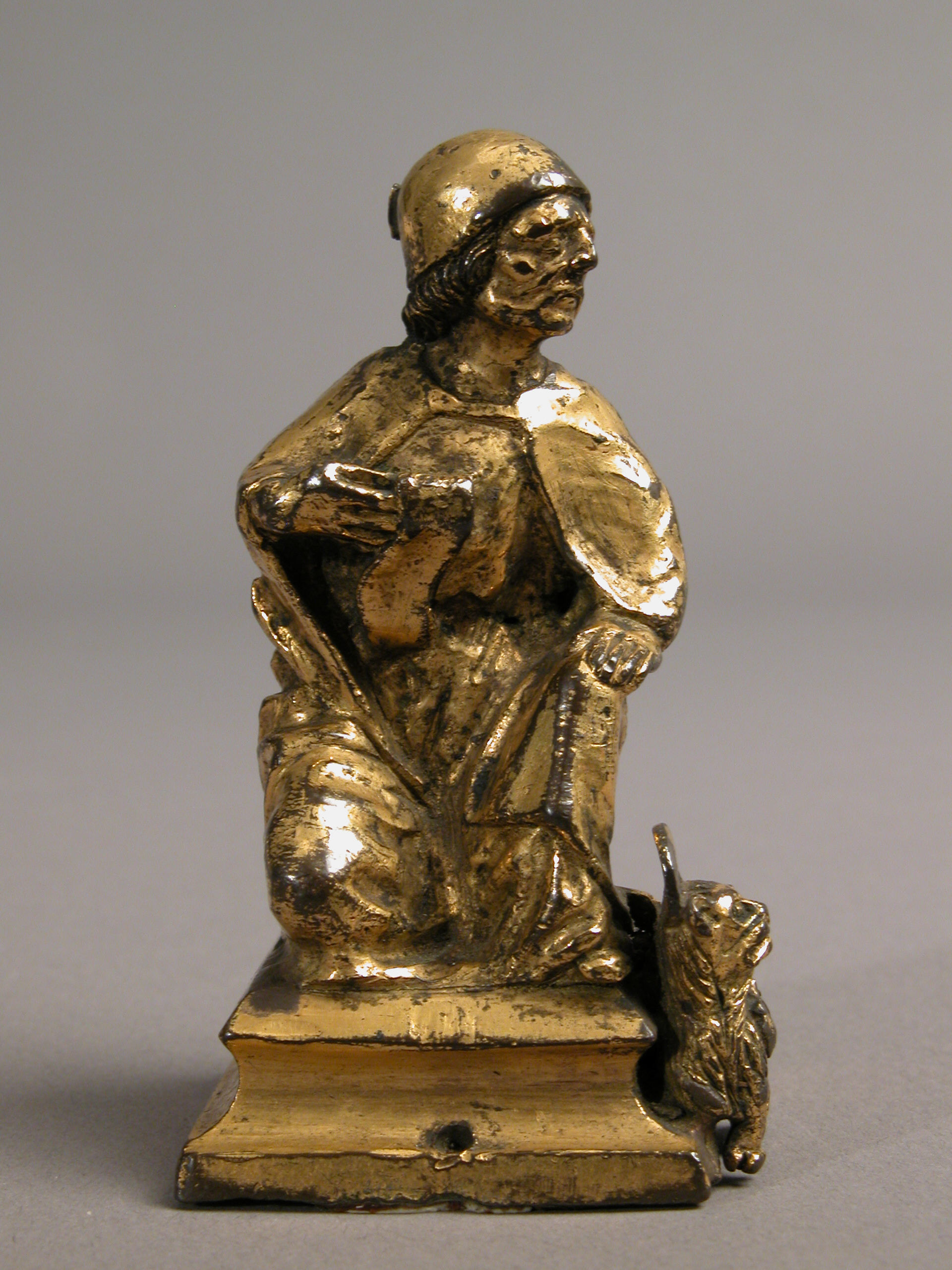
Saint Mark
Doctrinal reflection
This gilded copper-alloy statuette of Saint Mark, dated to approximately 1460–1470 AD and attributed to an Italian workshop, presents a mid-fifteenth-century sculptural interpretation of the Evangelist within the broader tradition of devotional metalwork. Although the object is catalogued under medieval art at the Metropolitan Museum of Art (Frederick C. Hewitt Fund, 1911), its date places it firmly within the early Italian Renaissance transition, when Quattrocento workshops in northern Italy—particularly those in Venice and its environs—maintained strong iconographic continuity with Byzantine and Gothic prototypes while adapting sculptural form to humanist conventions. Saint Mark's identification in this tradition typically relies on the presence of the lion (his tetramorphic symbol derived from Ezekiel's vision and the Book of Revelation), a codex or scroll of his Gospel, and occasional depictions of his characteristic bearded physiognomy. The gilding technique, achieved through mercury-fire gilding on cast copper alloy, reflects workshop practices documented extensively in Venetian and Paduan metalwork of the period. Iconographically, Mark as Evangelist participates in the theological program of the four-Gospel witness to Christ's Incarnation, Passion, and Resurrection—a program codified in Byzantine art and transmitted into Latin devotional objects. The statuette's function as a portable devotional or altar object situates it within a category of liturgical furnishings that bridged private piety and ecclesiastical use. Scholarly interest in such works centers on workshop attribution, transmission of Byzantine iconographic formulae into Renaissance sculptural media, and the economics of luxury metalwork patronage in fifteenth-century Italy. Sources: Gesta (International Center of Medieval Art); Journal of the Warburg and Courtauld Institutes; Metropolitan Museum Journal.