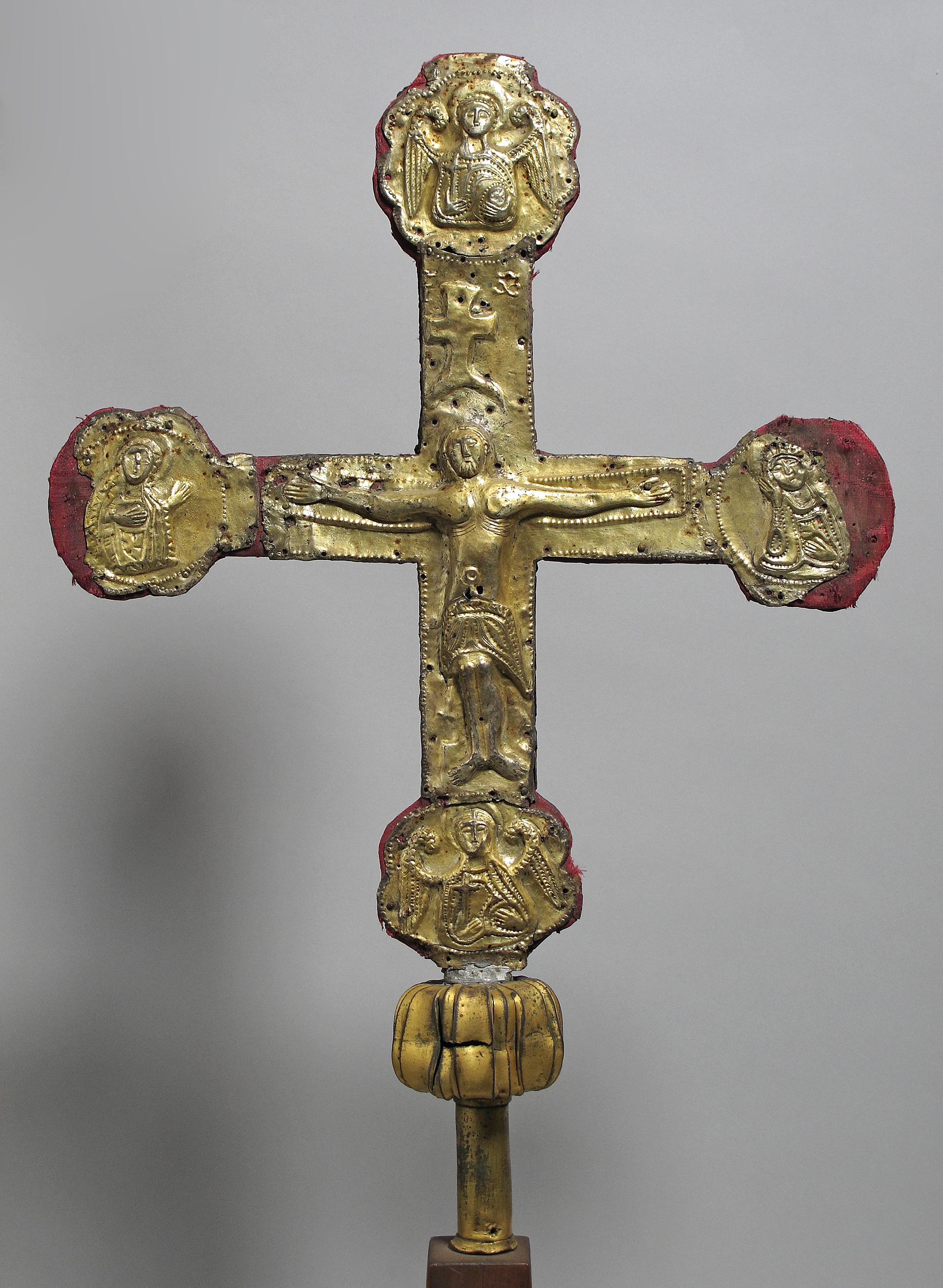
Processional Cross
Doctrinal reflection
This processional cross, dated to the eleventh century AD and attributed to Spanish manufacture, belongs to the tradition of Romanesque liturgical metalwork that flourished across the Iberian Peninsula during the period of the Christian reconquest. Constructed of wood overlaid with gilded silver, it exemplifies the costly materials and refined craftsmanship associated with ecclesiastical patronage in medieval Spain, where royal and monastic workshops produced liturgical objects intended to project theological authority as well as aesthetic splendor. Processional crosses of this type were carried at the head of liturgical processions, functioning as visible proclamations of Christ's victory over death — a theology rooted in Pauline and Johannine texts concerning the cross as the instrument of redemption (1 Corinthians 1:18; Colossians 2:14-15). The gilt surface would have caught and amplified candlelight during processions, embedding the instrument of crucifixion within a visual economy of glory rather than shame. Spanish Romanesque crosses of this period frequently display figural decoration in repoussé or engraved silver, depicting Christological scenes or the Agnus Dei, though specific iconographic details of this object require direct examination to establish fully. The cross entered the Metropolitan Museum's collection as part of the 1917 gift of J. Pierpont Morgan, whose acquisitions remain foundational to the museum's medieval holdings. Scholarly assessment situates this object within a broader corpus of Iberian liturgical silver studied by Gómez-Moreno and subsequent researchers. The work is best assessed against the Leonese and Castilian metalwork traditions rather than northern European Ottonian or Mosan comparanda. Sources: Gómez-Moreno, Catálogo monumental de España; Metropolitan Museum of Art Bulletin; Speculum: A Journal of Medieval Studies.