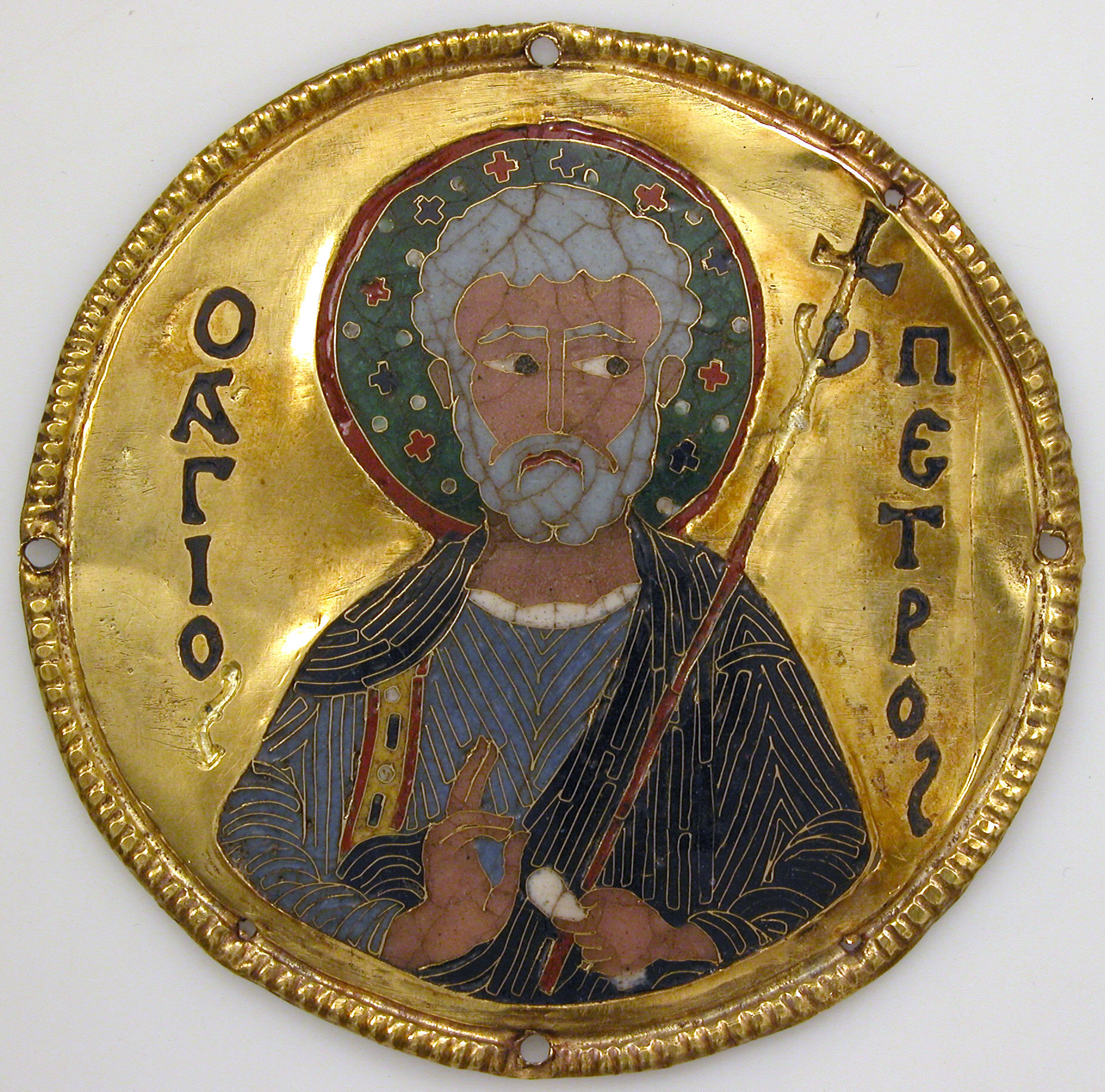
Medallion with Saint Peter from an Icon Frame
Doctrinal reflection
This medallion with Saint Peter, produced circa 1100 AD, represents a surviving component of a larger icon frame, executed in cloisonné enamel with gold and silver ground. The work belongs to the mature middle Byzantine period, when Constantinopolitan luxury metalwork had achieved its most refined technical and aesthetic expression. Cloisonné enamel production at this level—involving the painstaking construction of fine metal wire cells (cloisons) filled with vitreous paste and fired to produce jewel-like color fields—was almost certainly the product of imperial or court-affiliated workshops in Constantinople. Icon frames (epístyla or border medallions) adorned major panel icons or iconostasis beams, and their medallion portraits of saints functioned as a liturgical ensemble situating the central devotional image within a broader hagiographic and theological program. Saint Peter is depicted in his canonical Byzantine typology: broad forehead, short curling white or silver-gray hair, compact beard, and apostolic vestments, typically holding a scroll or keys as his iconographic attributes. As the Coryphaeus (leader) of the apostles in Byzantine theology, Peter occupied a prominent position in such framing programs, often flanking a central Deësis grouping or Christological image. The medallion format, with its compact circular field and bust-length figure, derives ultimately from late antique imperial medallion coinage and consular ivory traditions, adapted seamlessly into Christian devotional use. The work entered the Metropolitan Museum of Art's collection as part of the renowned J. Pierpont Morgan gift of 1917, which deposited a foundational corpus of Byzantine metalwork in American collections. Sources: Byzantium: Faith and Power (1261–1557), Helen C. Evans, ed. (Metropolitan Museum of Art, 2004); Marvin C. Ross, Catalogue of the Byzantine and Early Mediaeval Antiquities in the Dumbarton Oaks Collection, vol. 2 (1965).