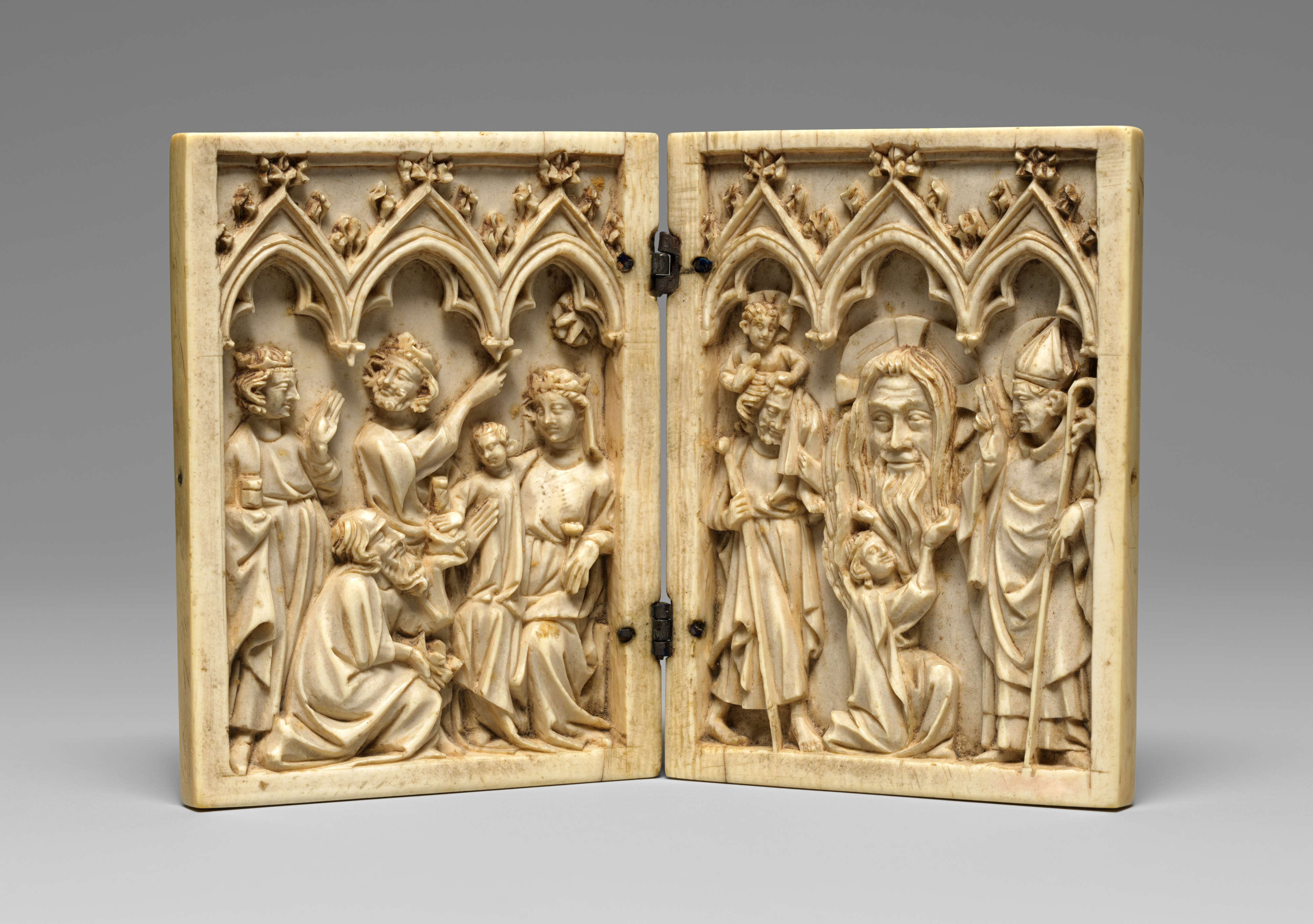
Diptych with the Adoration of the Magi and the Vera Icon (True Image)
Doctrinal reflection
This ivory diptych, dateable to approximately AD 1325–1350 and attributed to a North French workshop, comprises two panels of elephant ivory with metal mounts, now housed in the Medieval Art galleries of the Metropolitan Museum of Art (Gift of J. Pierpont Morgan, 1917). The left panel depicts the Adoration of the Magi, a canonical Epiphany scene in which the three kings present gifts to the enthroned Virgin and Child; the right panel presents the Vera Icon—the True Image of Christ's face imprinted on the veil of Veronica—a devotional motif that achieved wide currency in Gothic Western Europe following the Lateran indulgences associated with the Vernicle in thirteenth- and fourteenth-century Rome. Although the object was produced in France rather than Byzantium, it engages directly with Byzantine iconographic traditions: the mandylion theology of the acheiropoieton (image-not-made-by-hands) underlies the Vera Icon's visual and theological logic, and the compositional conventions for the Adoration ultimately derive from Paleologan prototypes. The pairing of the two panels constructs a deliberate theological argument: the Incarnation made visible at Epiphany is juxtaposed with Christ's suffering countenance, linking the kenotic descent of the Nativity cycle with Passion imagery. Gothic ivories of this type functioned as private devotional objects for aristocratic lay patrons. Scholarly attention has focused on the diffusion of Byzantine Christological imagery into Gothic material culture and the workshop practices of Parisian and North French ivory carvers active in the first half of the fourteenth century. Sources: Koechlin, Les ivoires gothiques français (1924); Williamson, Gothic Ivory Carving in England (2010); Gesta.