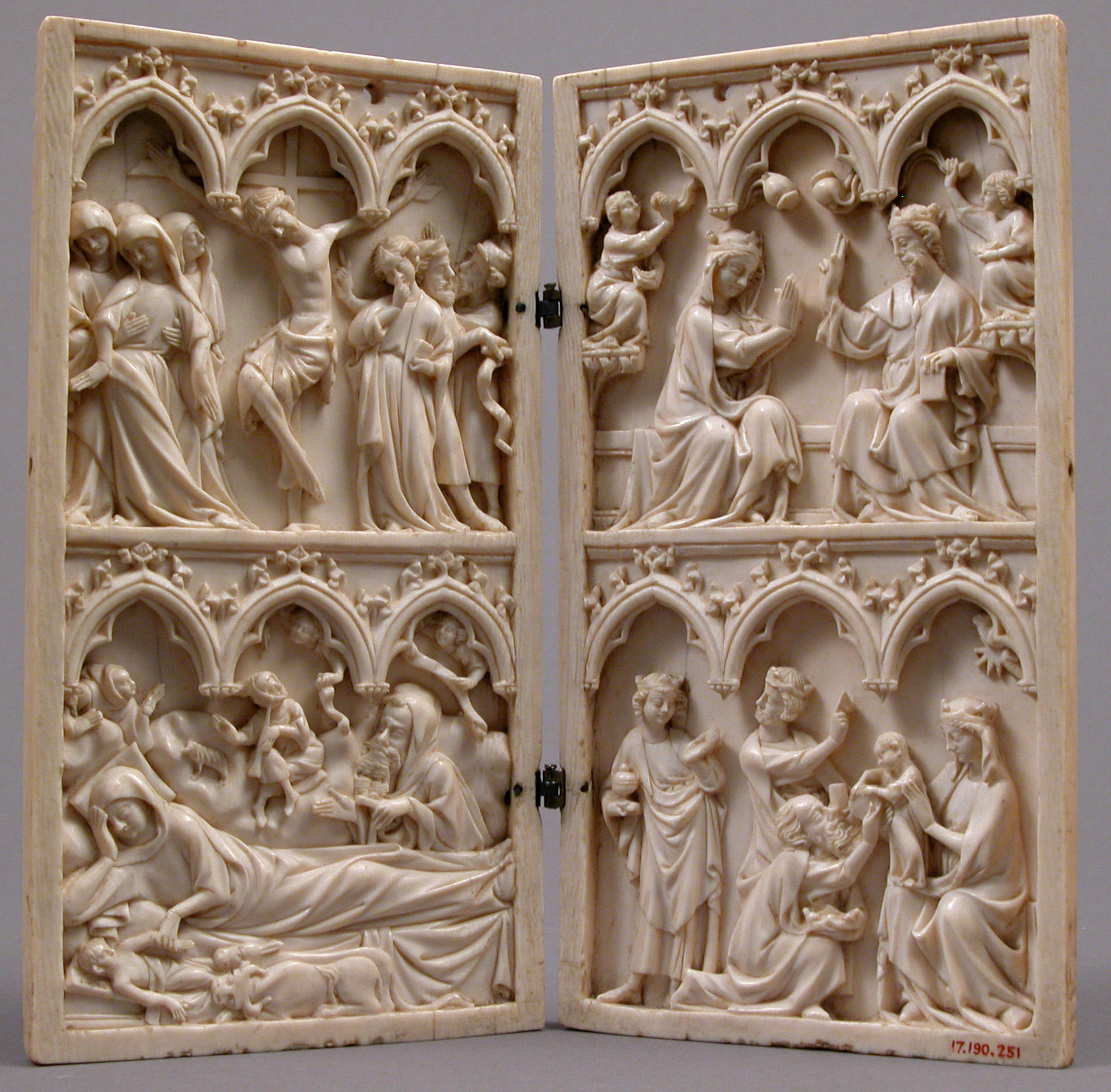
Diptych with Scenes from the Lives of Jesus and Mary
Doctrinal reflection
This French ivory diptych, dated to approximately AD 1350 and now in the Metropolitan Museum of Art (Gift of J. Pierpont Morgan, 1917), represents the mature phase of Gothic ivory carving centered in Paris during the fourteenth century. Carved from elephant ivory with metal mounts, the object belongs to a well-documented genre of portable devotional diptychs produced for aristocratic and clerical patrons. The two leaves present a compressed narrative cycle drawing on both canonical Gospel accounts and, significantly, apocryphal tradition — principally the Protoevangelium of James and the later Pseudo-Matthew — for episodes touching Mary's early life and the Nativity context. Standard scenes likely include the Annunciation (Luke 1:26-38), the Nativity (Luke 2:1-20), the Adoration of the Magi (Matthew 2:1-12), the Presentation in the Temple (Luke 2:22-38), the Crucifixion (John 19:17-30), and the Coronation of the Virgin — this last a medieval Western theological elaboration without direct biblical warrant, drawing on twelfth-century Marian devotion rather than scriptural text. The Coronation type reflects the conciliar and theological tradition identifying Mary as Queen of Heaven, which GLM documents as doctrinal tradition, not biblical teaching. The ivory medium signals elite patronage; such diptychs functioned as private meditation objects within the Catholic devotional framework of the period, where image-veneration was normative practice though not a biblical norm. Stylistically, the work exhibits the elegant contrapposto and drapery conventions associated with the Parisian ivory workshops active under the Valois court. The piece is significant for reconstructing the devotional iconographic programs circulating among fourteenth-century French nobility. Sources: Gaborit-Chopin, Ivoires médiévaux (1978); Williamson, Gothic Ivory Carvings in England and France (1982); Metropolitan Museum of Art Bulletin.