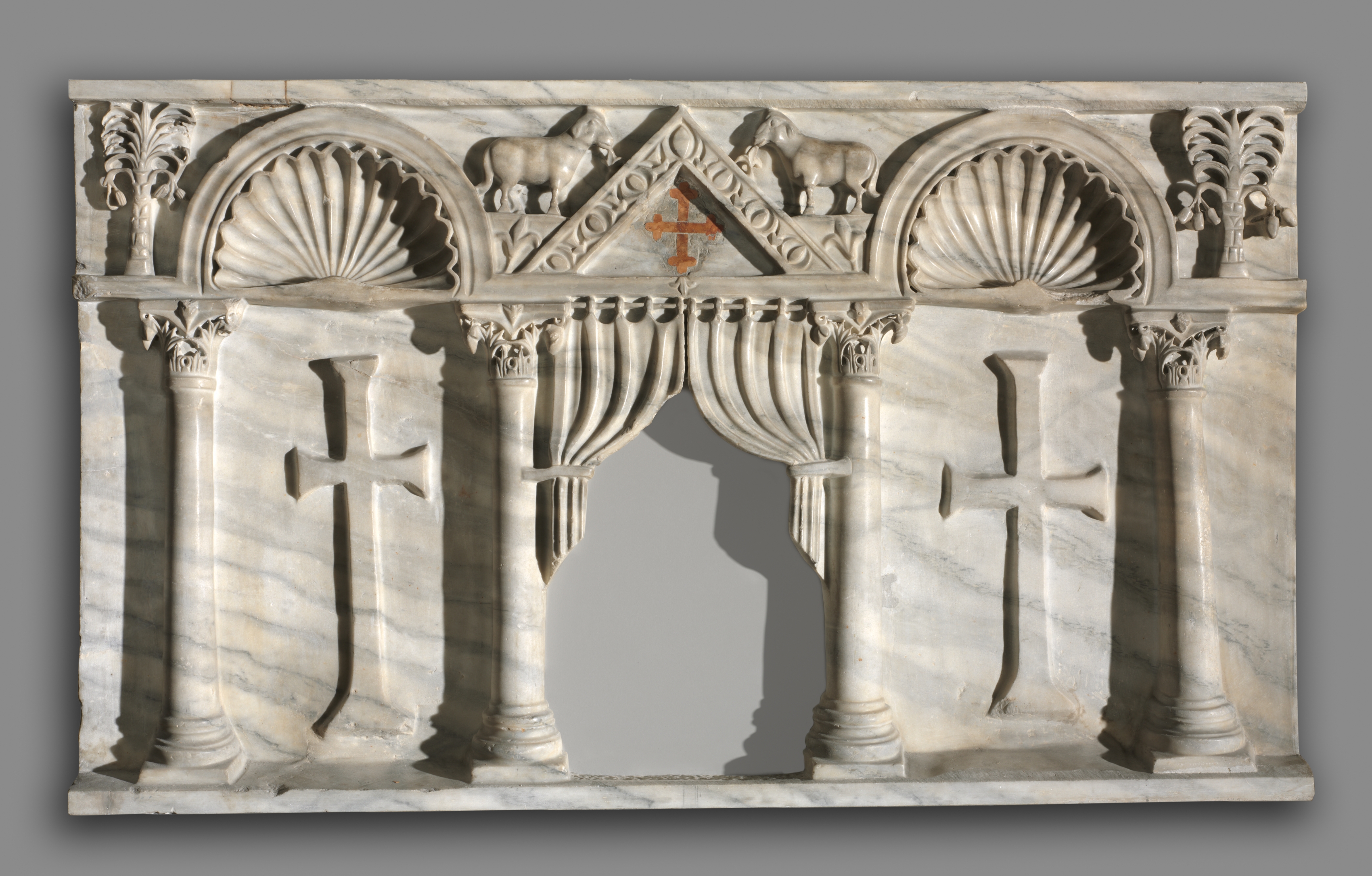
Altar Front
Doctrinal reflection
This carved marble altar front, dated c. 540–600 AD and attributed to early Byzantine workshops in either Constantinople or Ravenna, represents a significant example of architectural liturgical sculpture from the Justinianic period. The panel's dimensions distinguish it from standard sarcophagus production associated with Ravenna workshops, suggesting a specialized commission as an altar front or altar screen element. Its most functionally diagnostic feature is the small fenestella—a diminutive aperture framed by opened curtains between the central columns—which almost certainly served as a viewing and veneration window for a reliquary deposited within or beneath the altar structure. This practice aligns with the Constantinian and post-Constantinian tradition of placing martyrs' relics beneath altar mensa, codified in liturgical custom by the late sixth century. Iconographically, the panel deploys a coherent Early Christian symbolic vocabulary: scallop shells evoking baptismal regeneration and the soul's journey; agnus Dei figures referencing sacrificial Christology (John 1:29); palm fronds signifying victory over death and martyrdom; and crosses as the central salvific emblem. The architectural framing—arches, pediments, columns—replicates the heavenly city or the Heavenly Jerusalem as a structural metaphor common to both sarcophagi and liturgical furnishings of the period. The panel's current location in the Cleveland Museum of Art allows comparative analysis against documented Ravenna workshop productions and broader Justinianic decorative programs. Scholarly significance lies in its contribution to understanding the material mediation of relic veneration and the translation of funerary iconographic programs into active liturgical contexts. Sources: Dumbarton Oaks Papers; Arte Medievale; Cahiers Archéologiques.