Ancient Bible Index
Thirty-eight biblical manuscripts that witness God’s preservation of his Word. From the Great Isaiah Scroll a century before Christ to the Garima Gospels in the Ethiopian highlands, each entry is a witness in its own tongue — Hebrew, Greek, Latin, Syriac, Coptic, Gothic, Geʽez. The Word stands. These are the witnesses.
38
MANUSCRIPTS
10
TRADITIONS
5
TYPES
~2,150
YEARS
Featured Witnesses
Ten anchor manuscripts that map the corpus — start here.
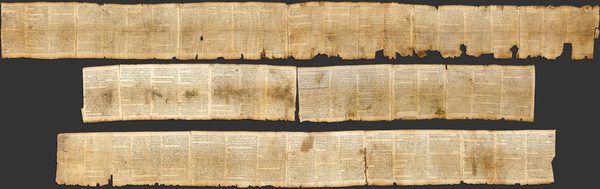 Scroll
The Great Isaiah Scroll
Shrine of the Book, Israel Museum, Jerusalem
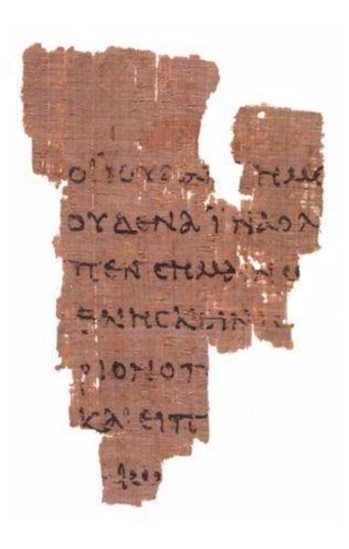 Papyrus
𝔓52 — Rylands Library Papyrus P52
John Rylands Library, University of Manchester
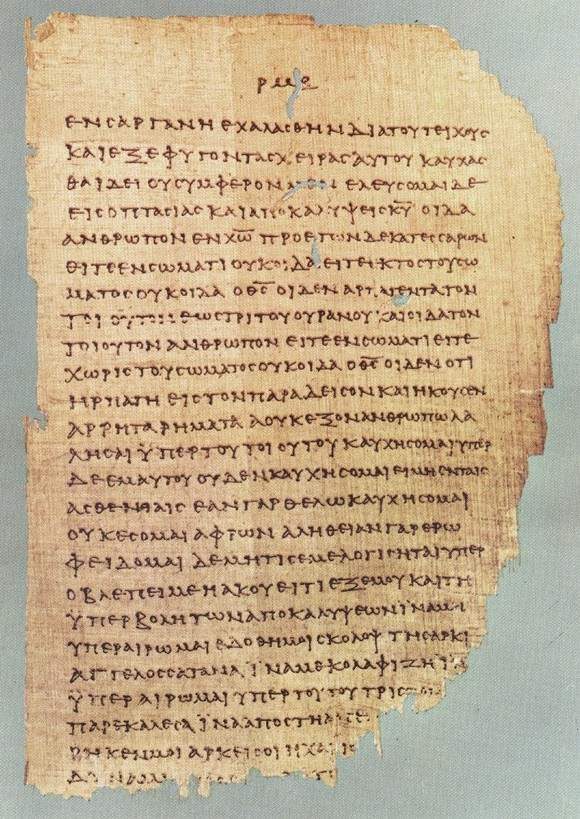 Papyrus
𝔓46 — Chester Beatty Papyrus II
Chester Beatty Library, Dublin (56 leaves) and University of Michigan (30 leaves)
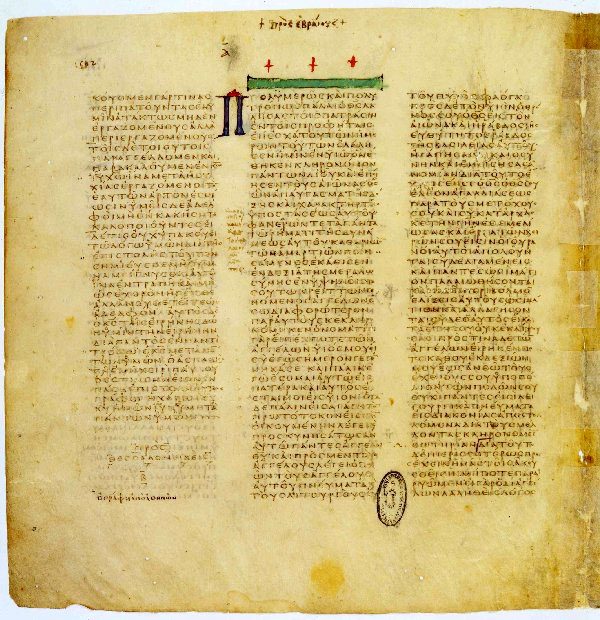 Codex (Uncial)
Codex Vaticanus
Vatican Library, Rome (Vat. gr. 1209)
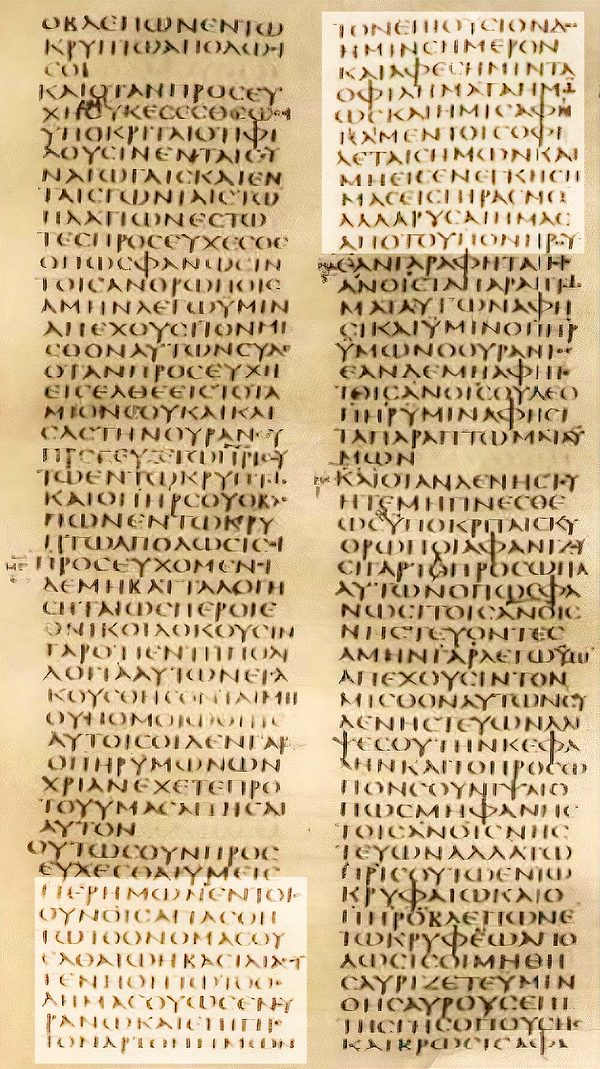 Codex (Uncial)
Codex Sinaiticus
British Library (347 leaves); University Library, Leipzig (43 leaves); Saint Catherine's Monastery, Sinai (12 leaves and fragments); National Library of Russia, Saint Petersburg (5 fragments)
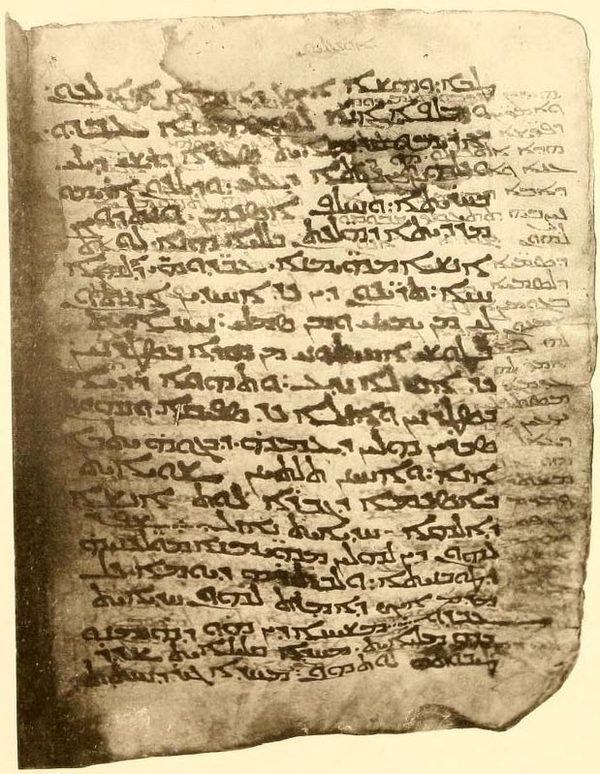 Palimpsest
The Sinaitic Palimpsest
Saint Catherine's Monastery, Sinai (Syr. Sin. 30)
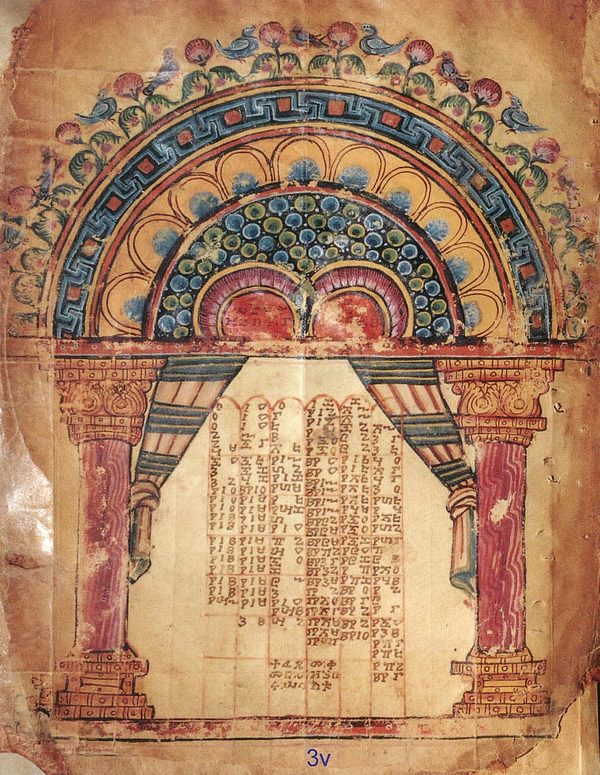 Codex (Uncial)
The Garima Gospels
Abba Garima Monastery, Tigray, Ethiopia (preserved since their production)
 Codex (Uncial)
Codex Argenteus
Carolina Rediviva Library, Uppsala University, Sweden
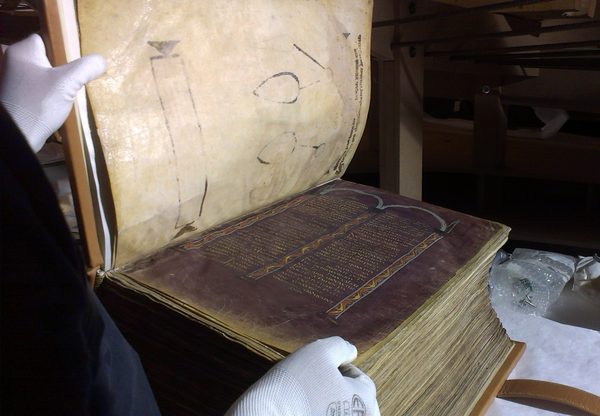 Codex (Uncial)
Codex Amiatinus
Biblioteca Medicea Laurenziana, Florence (Amiat. 1)
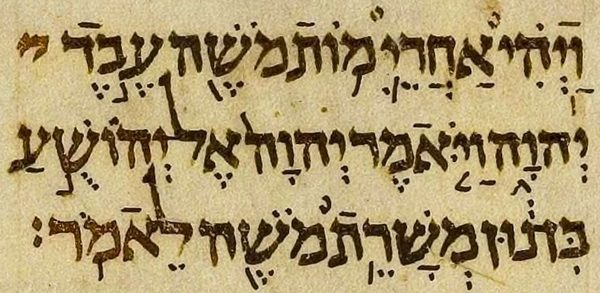 Codex
CodexThe Aleppo Codex
Shrine of the Book, Israel Museum, Jerusalem (partial)
TRADITION:
TYPE:
ERA:
TESTAMENT:
All Manuscripts
 early_church_document
1 Enoch (The Book of Enoch)
Aramaic fragments at Israel Museum (Dead Sea Scrolls); complete Ge'ez manuscripts at British Library, Bibliothèque nationale, and Ethiopian Orthodox monasteries
ScrollThe Great Isaiah Scroll
Shrine of the Book, Israel Museum, Jerusalem
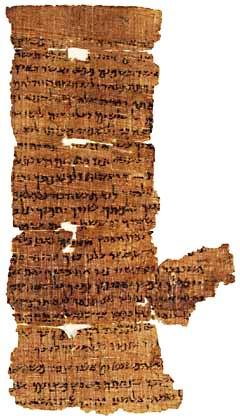 Papyrus
The Nash Papyrus
Cambridge University Library
Scroll (rule of life)The Community Rule (1QS)
Shrine of the Book, Israel Museum, Jerusalem
Scroll (commentary)The Habakkuk Pesher (1QpHab)
Shrine of the Book, Israel Museum, Jerusalem
Scroll (apocalyptic)The War Scroll (1QM)
Shrine of the Book, Israel Museum, Jerusalem
Scroll (Torah-form)The Temple Scroll (11QT)
Shrine of the Book, Israel Museum, Jerusalem
Scroll (parabiblical narrative)The Genesis Apocryphon (1QapGen)
Shrine of the Book, Israel Museum, Jerusalem
Scroll (hymnic)The Hodayot (1QH)
Shrine of the Book, Israel Museum, Jerusalem
Scroll (treasure list, copper)The Copper Scroll (3Q15)
Jordan Museum, Amman (with display copy at Shrine of the Book)
early_church_documentDidache (The Teaching of the Twelve Apostles)
Codex Hierosolymitanus (Jerusalem Codex H), 1056 AD, discovered 1873 by Bryennios in Constantinople
early_church_documentEpistle of Barnabas
Codex Sinaiticus (British Library, London); Codex Hierosolymitanus; later Greek and Latin witnesses
early_church_documentFirst Clement (Letter of Clement to the Corinthians)
Codex Alexandrinus (British Library, London); Codex Hierosolymitanus; Coptic and Syriac translations
Papyrus𝔓52 — Rylands Library Papyrus P52
John Rylands Library, University of Manchester
Translation tradition (preserved in medieval manuscripts and printed editions)Targum Jonathan
Preserved in many manuscripts; Yemenite tradition is the principal witness
Translation tradition (preserved in numerous medieval manuscripts and printed editions)Targum Onkelos
Preserved in many manuscripts; principal witness: British Library Or. 2363 and the Yemenite tradition
early_church_documentLetters of Ignatius of Antioch
Codex Mediceo-Laurentianus (Florence) and Codex Colbertinus (Paris) — middle recension; multiple later manuscripts
Translation (preserved in fragments and Hexapla witnesses)Aquila's Greek Translation
Surviving fragments scattered: Cairo Genizah leaves at Cambridge (Taylor-Schechter Collection); Mercati Hexapla palimpsest at the Ambrosiana, Milan; quotations in church fathers
Papyrus (Gospels fragment)Papyrus P104 (𝔓¹⁰⁴)
Sackler Library, University of Oxford
Papyrus (Epistles fragment)Papyrus P87 (𝔓⁸⁷)
Institut für Altertumskunde, University of Cologne
early_church_documentMuratorian Fragment
Biblioteca Ambrosiana, Milan, Italy (Codex J 101 sup.)
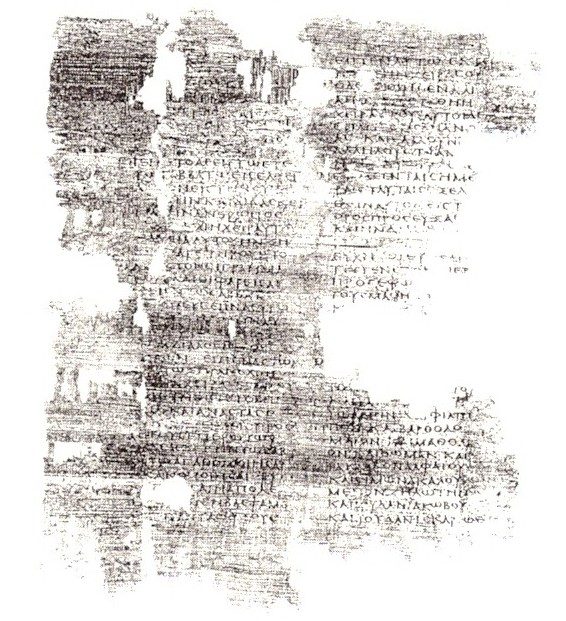
 Papyrus
𝔓66 — Bodmer Papyrus II
Bibliotheca Bodmeriana, Cologny, Switzerland
 Papyrus
𝔓4 + 𝔓64 + 𝔓67 — The Magdalen / Paris / Barcelona Witness
Bibliothèque nationale de France (𝔓4); Magdalen College, Oxford (𝔓64); Fundación Sant Lluc Evangelista, Barcelona (𝔓67)
Papyrus𝔓46 — Chester Beatty Papyrus II
Chester Beatty Library, Dublin (56 leaves) and University of Michigan (30 leaves)
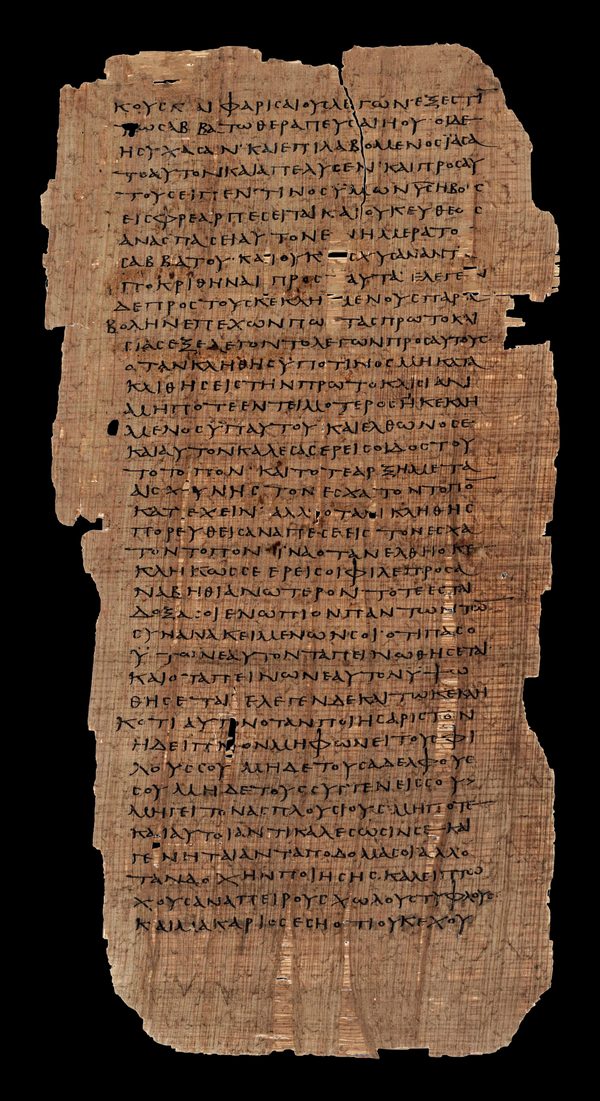 Papyrus
𝔓75 — Bodmer Papyrus XIV–XV
Vatican Library (transferred from the Bodmer Foundation in 2007)
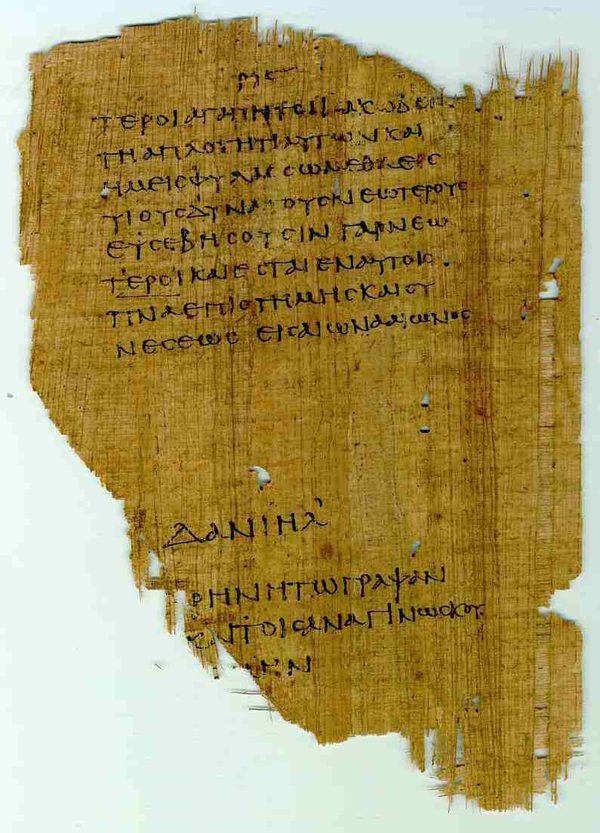 Papyrus
Papyrus 967
Chester Beatty Library, Dublin; John Rylands Library, Manchester; Princeton University; Cologne University; Madrid
Papyrus (Gospels fragment)Papyrus P77 (𝔓⁷⁷)
Sackler Library, University of Oxford
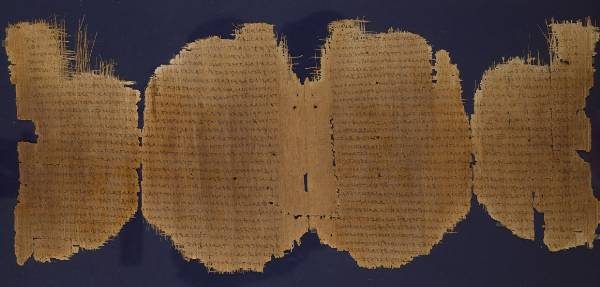 Papyrus
𝔓45 — Chester Beatty Papyrus I
Chester Beatty Library, Dublin (most leaves); single leaf in Vienna
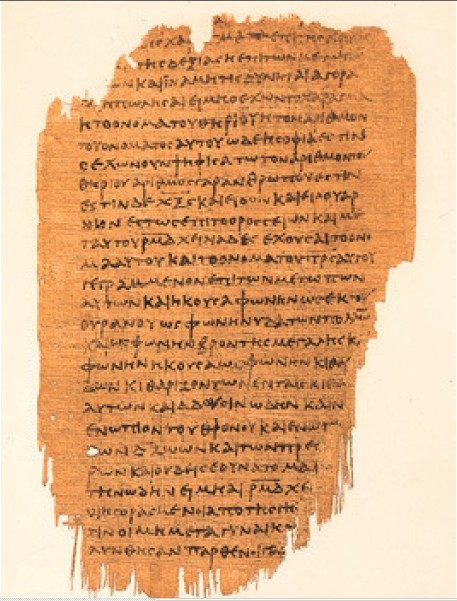 Papyrus
𝔓47 — Chester Beatty Papyrus III
Chester Beatty Library, Dublin
Papyrus (Gospels fragment)Papyrus P1 (𝔓¹)
University of Pennsylvania Museum of Archaeology and Anthropology, Philadelphia
Papyrus (Revelation fragments)Papyrus P115 (𝔓¹¹⁵)
Sackler Library, University of Oxford
Critical edition (preserved fragmentarily in palimpsest and citations)Origen's Hexapla (Mercati Palimpsest)
Biblioteca Ambrosiana, Milan (Mercati palimpsest); other fragments in Cambridge and elsewhere
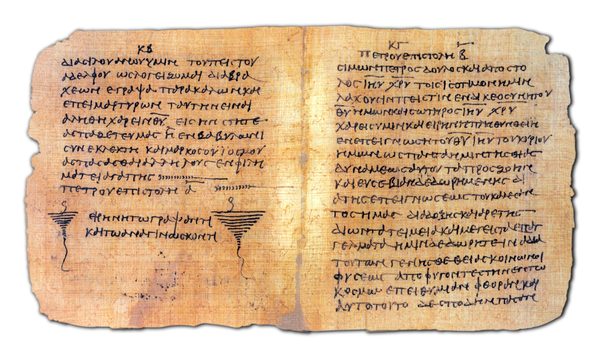 Papyrus
𝔓72 — Bodmer Papyrus VII–VIII
Vatican Library (transferred from the Bodmer Foundation)
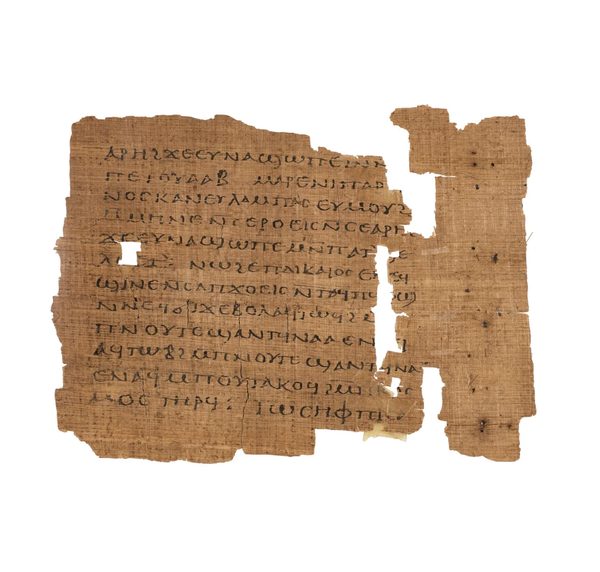 Codex (Papyrus)
Sahidic Coptic New Testament — Crosby-Schøyen Codex
Schøyen Collection, Oslo (formerly University of Mississippi)
early_church_documentOxyrhynchus Hymn (P.Oxy. XV 1786)
Papyrology Rooms, Sackler Library, Oxford (Bodleian Art, Archaeology and Ancient World Library)
Codex (Uncial)Codex Vaticanus
Vatican Library, Rome (Vat. gr. 1209)
Codex (Uncial)Codex Sinaiticus
British Library (347 leaves); University Library, Leipzig (43 leaves); Saint Catherine's Monastery, Sinai (12 leaves and fragments); National Library of Russia, Saint Petersburg (5 fragments)
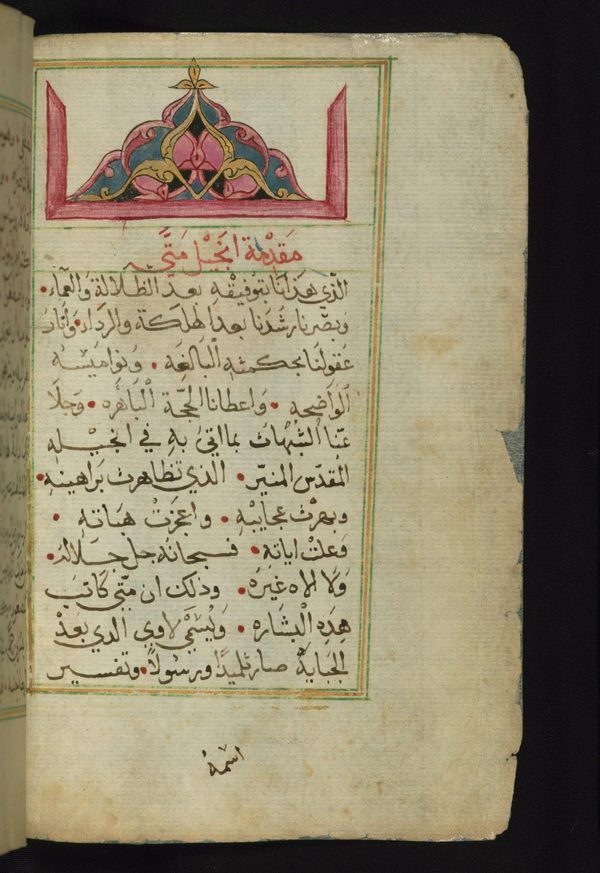 Codex
CodexBohairic Coptic New Testament
Multiple repositories — Vatican Library, British Library, Bibliothèque nationale de France, Coptic Patriarchate Library Cairo
Codex (Gospels, fragmentary)Codex Bobiensis (k)
Biblioteca Nazionale Universitaria, Turin (G. VII. 15)
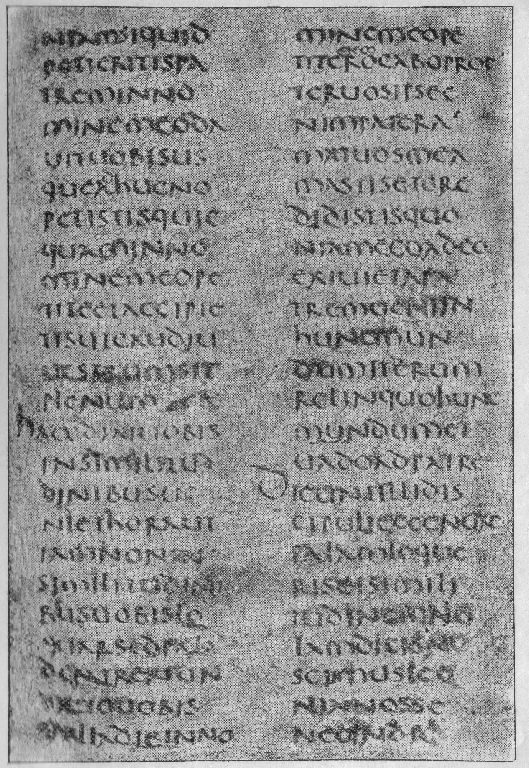 Codex (Uncial)
Codex Vercellensis
Biblioteca Capitolare di Vercelli, Italy (Codex Eusebianus)
PalimpsestThe Sinaitic Palimpsest
Saint Catherine's Monastery, Sinai (Syr. Sin. 30)
Codex (Gospels, fragmentary)Codex Palatinus (e)
Biblioteca Nazionale Universitaria, Turin (with leaves at Dublin and London)
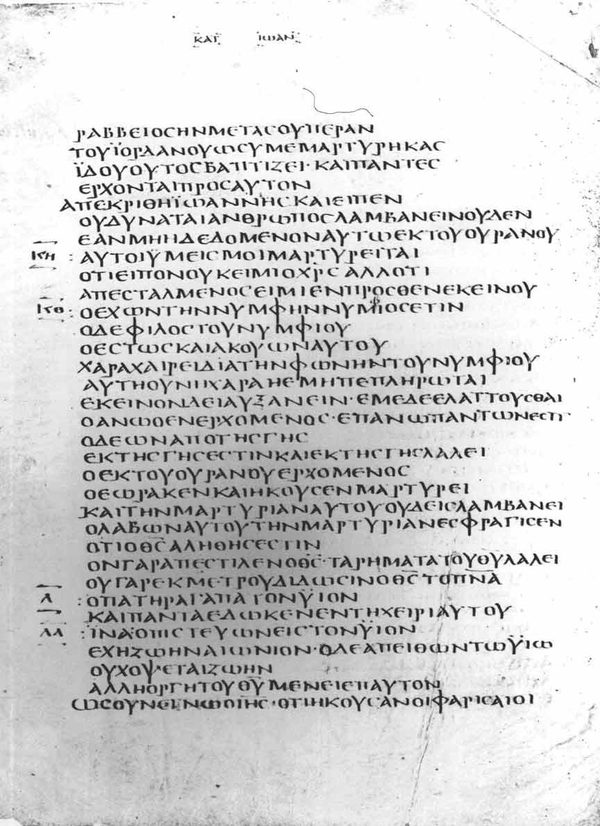 Codex (Uncial)
Codex Bezae Cantabrigiensis
Cambridge University Library (MS Nn.2.41)
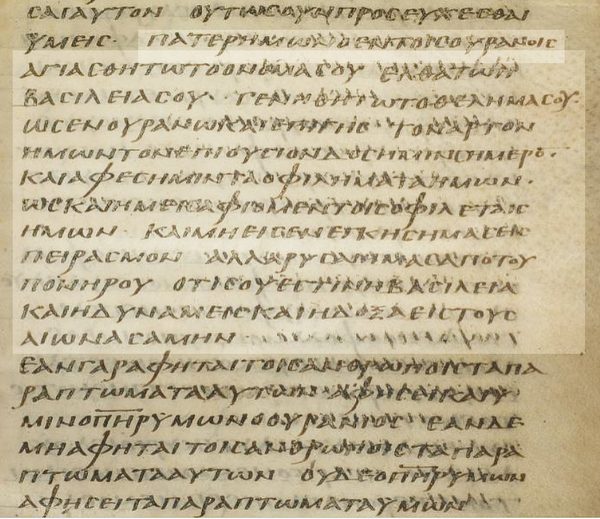 Codex (Uncial)
Codex Washingtonianus
Smithsonian National Museum of Asian Art (Freer Gallery), Washington, D.C.
Codex (Uncial)The Garima Gospels
Abba Garima Monastery, Tigray, Ethiopia (preserved since their production)
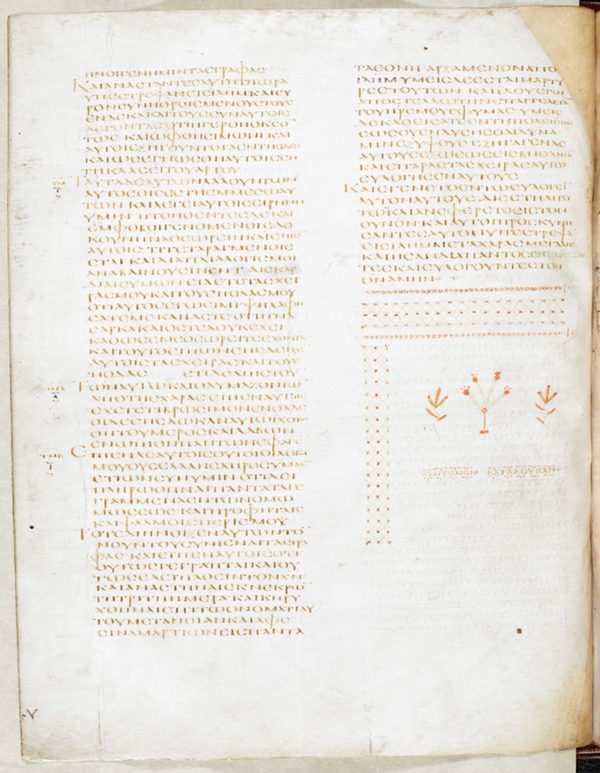 Codex (Uncial)
Codex Alexandrinus
British Library, London (Royal MS 1 D V–VIII)
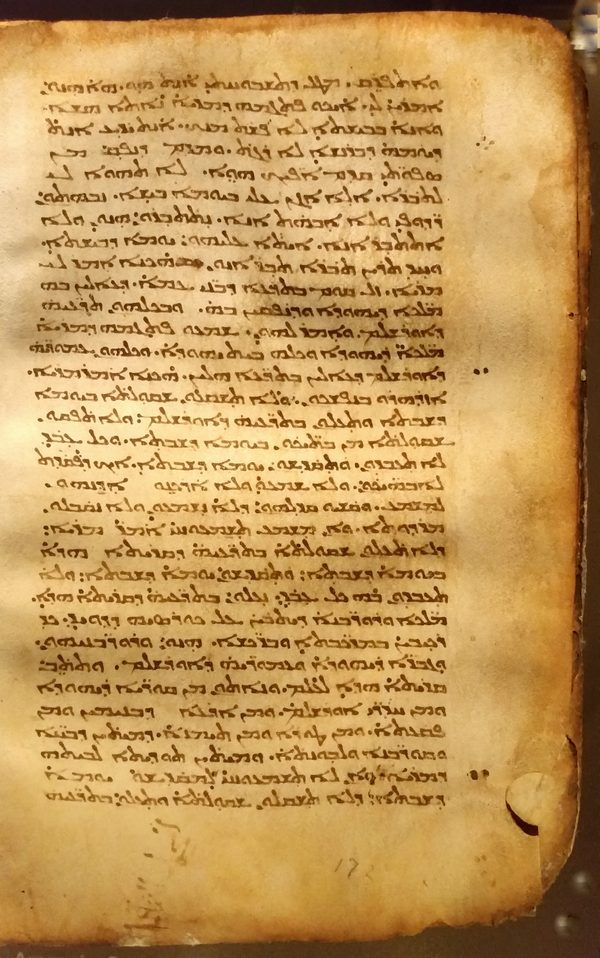 Codex (Uncial)
The Peshitta
Multiple repositories — British Library (Add MS 14470 et al.), Vatican Library, St. Catherine's Monastery, Cambridge
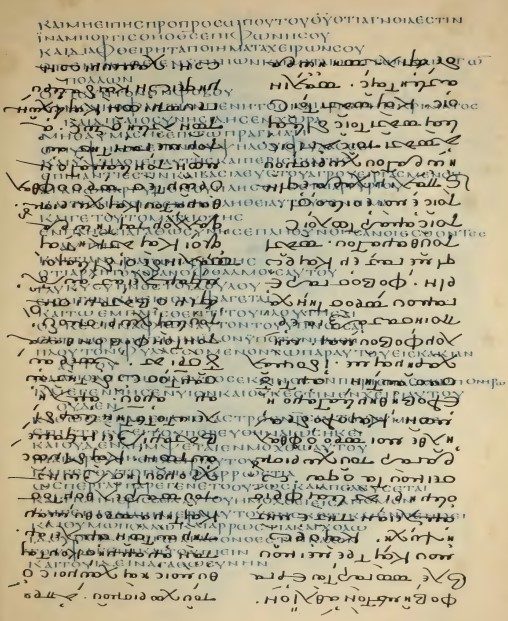 Palimpsest
Codex Ephraemi Rescriptus
Bibliothèque nationale de France, Paris (Grec 9)
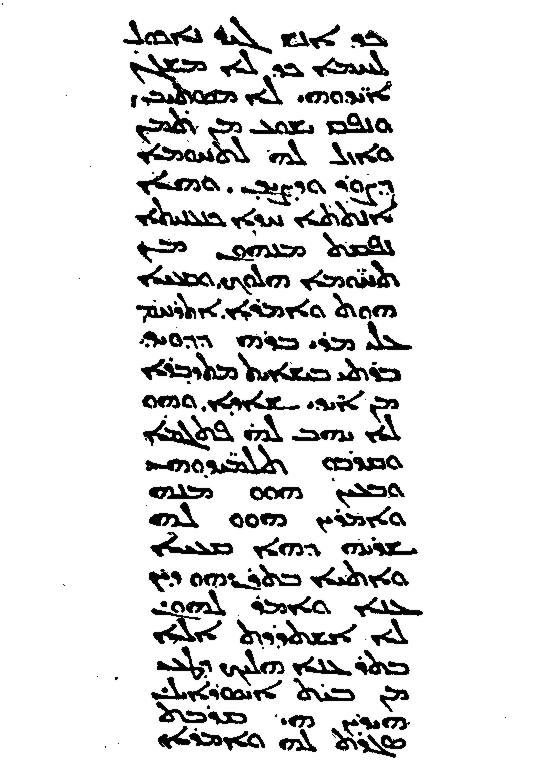 Codex (Uncial)
The Curetonian Gospels
British Library, London (Add MS 14451)
Codex (Gospels)Codex Veronensis (b)
Biblioteca Capitolare, Verona (MS VI)
Codex (illuminated Genesis, fire-damaged)The Cotton Genesis
British Library, London (Cotton MS Otho B VI)
Codex (Uncial)Codex Argenteus
Carolina Rediviva Library, Uppsala University, Sweden
Codex (Pauline epistles, fragmentary)Codex Coislinianus
Bibliothèque nationale de France, Paris (Coislin 202) and dispersed leaves in Athos, Moscow, Saint Petersburg, Kyiv, and Turin
Codex (illuminated Gospels)The Rossano Gospels
Museo Diocesano, Rossano, Calabria
Codex (Matthew, fragmentary)The Sinope Gospels (Codex Sinopensis)
Bibliothèque nationale de France, Paris (Suppl. Gr. 1286)
Codex (illuminated Genesis)The Vienna Genesis
Austrian National Library, Vienna
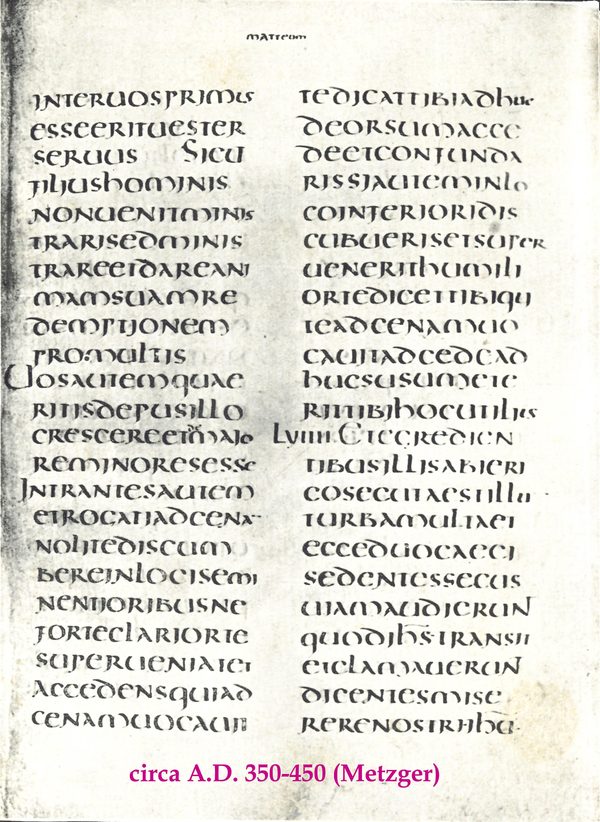 Codex (Uncial)
Codex Claromontanus
Bibliothèque nationale de France, Paris (Grec 107)
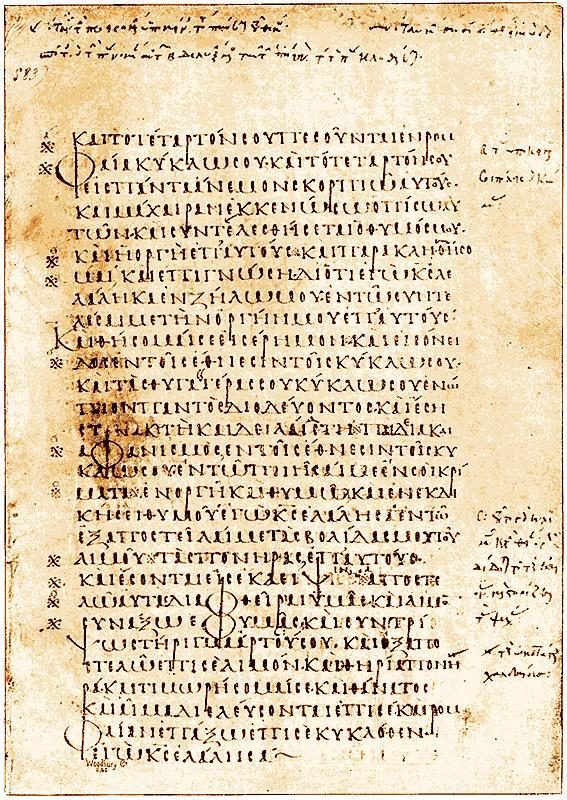 Codex (Uncial)
Codex Marchalianus
Vatican Library, Rome (Vat. gr. 2125)
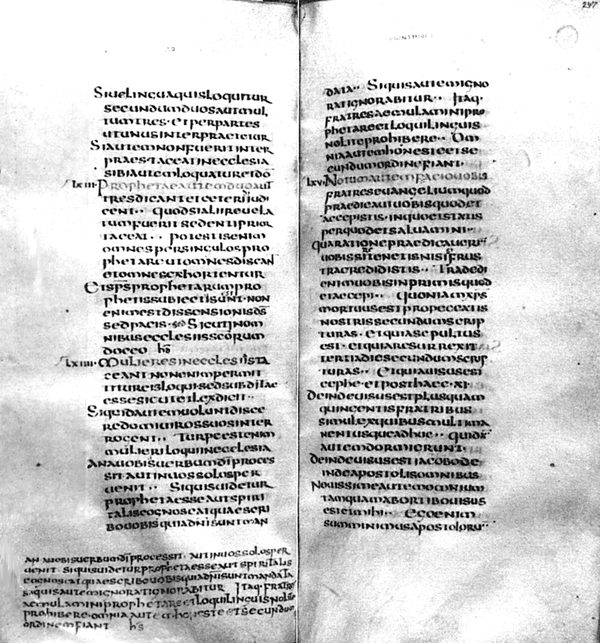 Codex (Uncial)
Codex Fuldensis
Hessische Landesbibliothek, Fulda, Germany
Codex (illuminated Gospels)The Rabbula Gospels
Biblioteca Medicea Laurenziana, Florence (Plut. I, 56)
Codex (illuminated Gospels)Book of Durrow
Trinity College Library, Dublin
Codex (Uncial)Codex Amiatinus
Biblioteca Medicea Laurenziana, Florence (Amiat. 1)
illuminated_manuscriptLindisfarne Gospels
British Library, London (Cotton MS Nero D.IV)
illuminated_manuscriptSt. Chad Gospels
Lichfield Cathedral
Codex (Pauline epistles)Codex Boernerianus
Sächsische Landesbibliothek, Dresden
Codex (Gospels)Codex Cyprius
Bibliothèque nationale de France, Paris (Grec 63)
illuminated_manuscriptBook of Armagh
Trinity College Dublin (MS 52)
 Codex (Minuscule)
Minuscule 33 — Queen of the Cursives
Bibliothèque nationale de France, Paris (Grec 14)
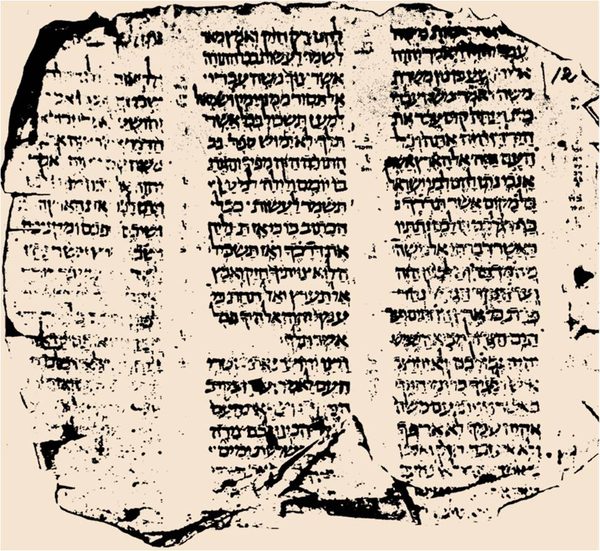 Codex
CodexThe Cairo Codex of the Prophets
Karaite Synagogue collection (formerly), now disputed; portions in the Cambridge University Library Cairo Genizah collection
CodexThe Aleppo Codex
Shrine of the Book, Israel Museum, Jerusalem (partial)
illuminated_manuscriptParis Psalter
Bibliothèque nationale de France, Paris (Grec 139)
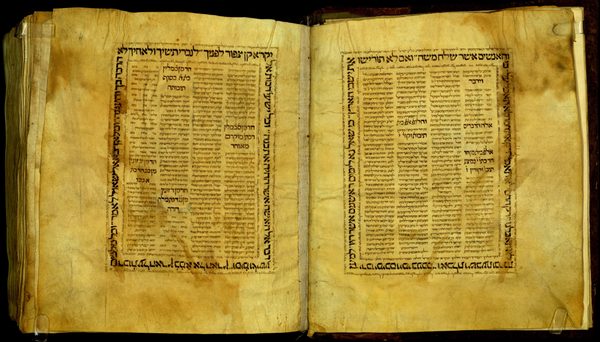 Codex
CodexThe Damascus Pentateuch
National Library of Israel, Jerusalem
Codex (New Testament)The Khabouris Codex
Private collection (United States); high-resolution facsimile online
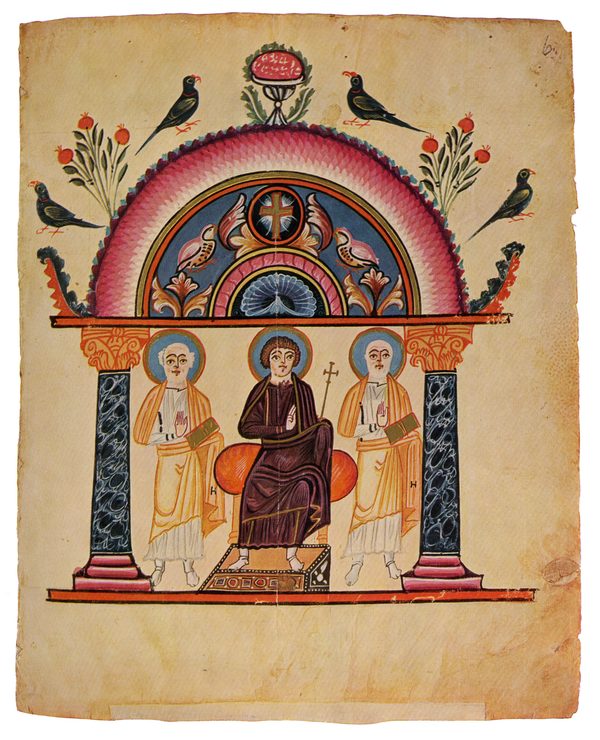 Codex (Uncial)
The Echmiadzin Gospels
Matenadaran (Mesrop Mashtots Institute of Ancient Manuscripts), Yerevan, Armenia
Codex (illuminated Gospels)The Mughni Gospels
Matenadaran (Mesrop Mashtots Institute of Ancient Manuscripts), Yerevan
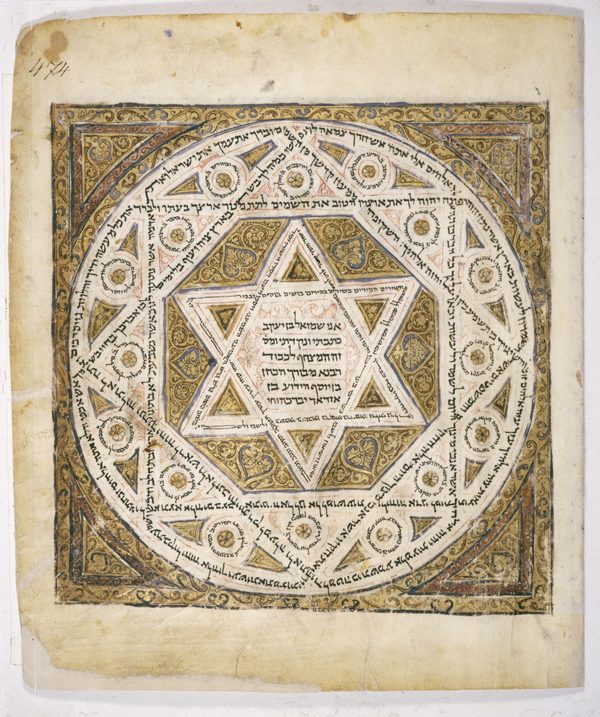 Codex
CodexThe Leningrad Codex
National Library of Russia, Saint Petersburg
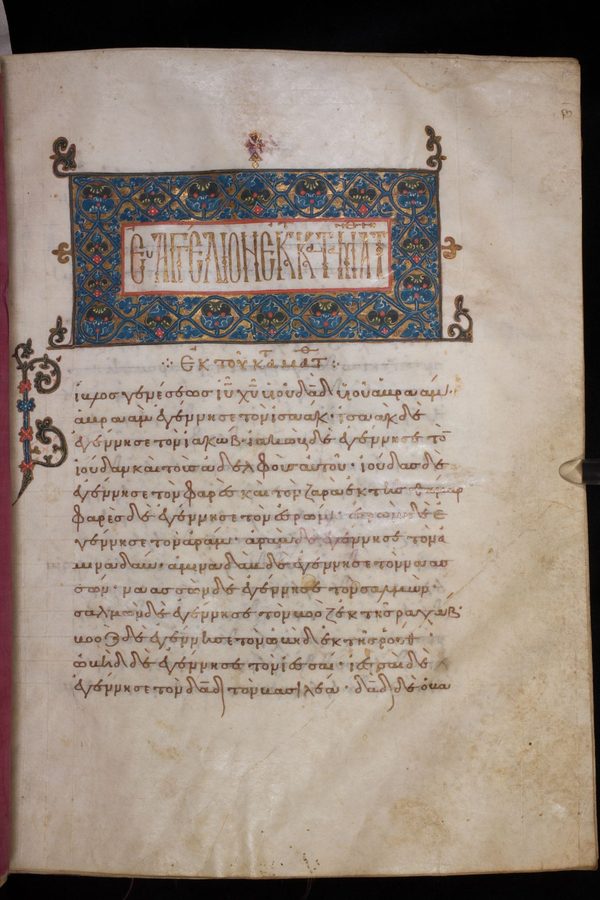 Codex (Minuscule)
Family 13 — The Ferrar Group
Multiple repositories (Paris, Vienna, Florence, others) — the family encompasses 13, 69, 124, 174, 230, 346, 543, 788, 826, 828, 983, 1689, 1709 and related manuscripts
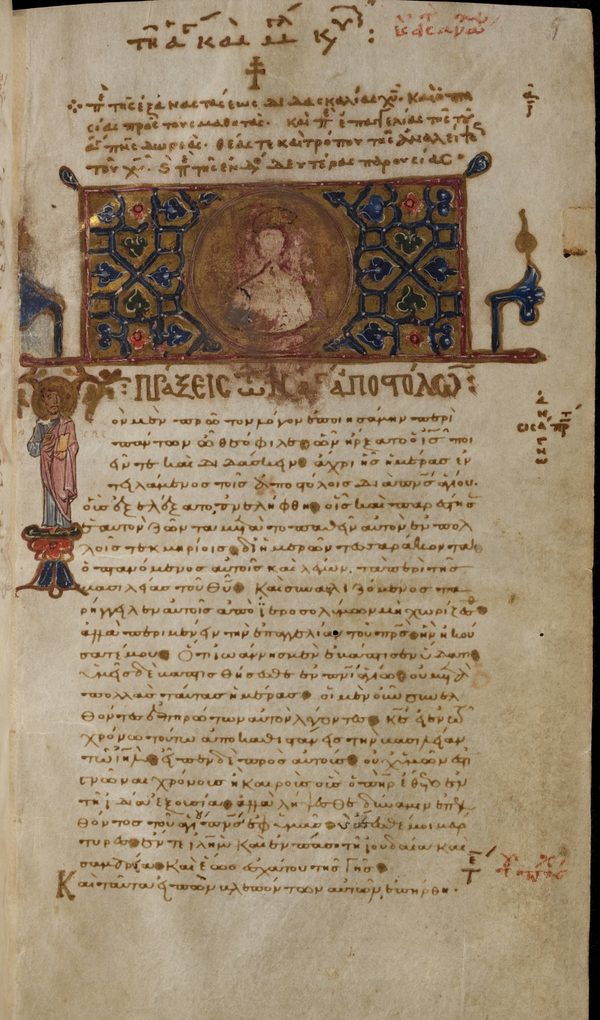 Codex (Minuscule)
Minuscule 1 — Family 1 Archetype
Universitätsbibliothek Basel (AN IV.2)
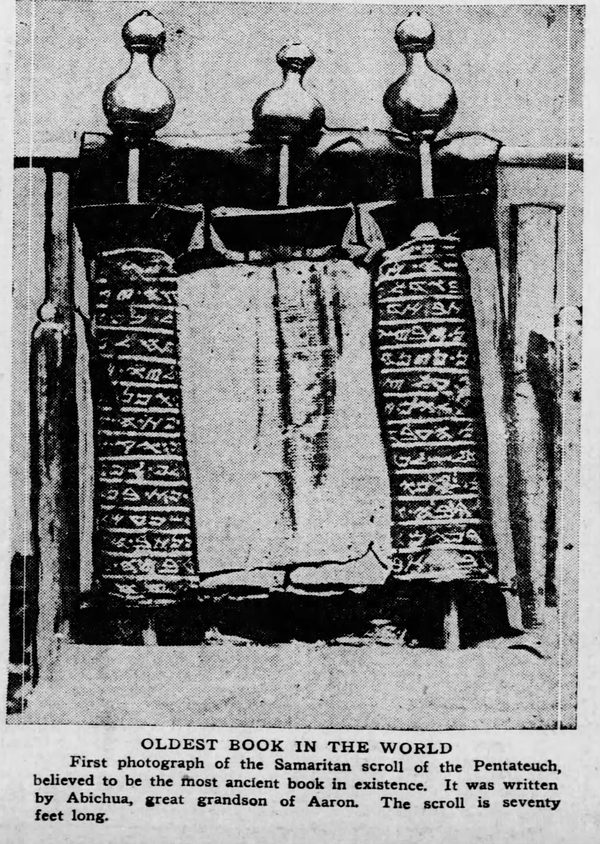 Scroll
The Samaritan Pentateuch
Samaritan community, Nablus and Holon (Abisha Scroll); other manuscripts in British Library, Cambridge University Library, Russian National Library